

With the characteristics of oil and organic pollutants, the process of treating wastewater from cooking oil production using biological technology is chosen by many units. The biological technology applied to treat wastewater from cooking oil production is typically AAO (Anaerobic – Anoxic – Oxic).
- Origin and pollution characteristics of wastewater from cooking oil production
- Harmful effects of wastewater from cooking oil production
- Wastewater treatment of cooking oil production by biotechnology
Origin and pollution characteristics of wastewater from cooking oil production
The cooking oil production process goes through many stages, from preparing and processing raw materials, crushing, extracting and treating with solvents, filtering, refining to packaging, generating a lot of wastewater. Of which, the stage of washing-processing raw materials and cleaning equipment-factory generates the most wastewater. In addition, wastewater from cleaning activities of workers also accounts for a large amount.
Wastewater from cooking oil production contains two main characteristics: Oil and organic pollutants. Below is an example table analyzing the composition of the input wastewater of a current cooking oil factory:
| STT | Parameter | Unit | Input value |
| 1 | pH | – | 6.5 – 7.5 |
| 2 | BOD 5 | mg/l | 700 – 1000 |
| 3 | COD | mg/l | 1000 – 2000 |
| 4 | TSS | mg/l | 350 – 500 |
| 5 | Total N | mg/l | 35 – 55 |
| 6 | Total P | mg/l | 10 – 20 |
| 7 | Grease | mg/l | 180 – 280 |
| 8 | Total Coliform | MNP/100ml | 10 4 – 10 5 |
Harmful effects of wastewater from cooking oil production
If untreated, cooking oil production wastewater will cause many serious harms:
As for oil, this is a pollutant that can hinder the wastewater treatment process because it is not soluble in water and at low temperatures, oil has the ability to solidify and has high viscosity, obstructing the flow. When entering the wastewater treatment system, oil causes adhesion of microorganisms and suspended substances, thereby reducing the efficiency of wastewater treatment.
If wastewater containing oil is not treated and discharged directly into the environment, it will stick together and form clumps, causing unsightliness. Oil also reduces the ability of oxygen to diffuse into wastewater, hindering the decomposition of organic matter in wastewater, causing the water to smell bad, affecting people’s daily lives.
For organic pollutants, typically BOD, COD, TSS, Nitrogen, Phosphorus, if not treated and discharged directly into receiving sources, they will decompose and form compounds that cause foul odors such as H2S and eutrophication of receiving sources, toxic to aquatic animals and causing ecological imbalance.
With the harmful effects caused by cooking oil wastewater, the treatment of cooking oil production wastewater is a necessary requirement for every business to ensure environmental safety and avoid legal problems affecting the brand.
Wastewater treatment of cooking oil production by biotechnology
With the characteristics of oil and organic pollutants, the process of treating wastewater from cooking oil production using biotechnology is chosen by many units because it brings many advantages:
- High pollutant treatment efficiency.
- Ability to maintain system stability over long periods of time.
- Investment costs are not too high because they do not require much machinery.
- Low equipment maintenance and repair costs due to environmentally friendly biological treatment technology that causes little wear and tear on equipment.
- The operation is quite simple.
- Safe for operators due to reduced use of toxic chemicals.
- Reduces the possibility of re-contamination of the environment, which other methods of treating edible oil wastewater may encounter, such as chemical methods.
A wastewater treatment system for cooking oil production usually applies the following treatment process:
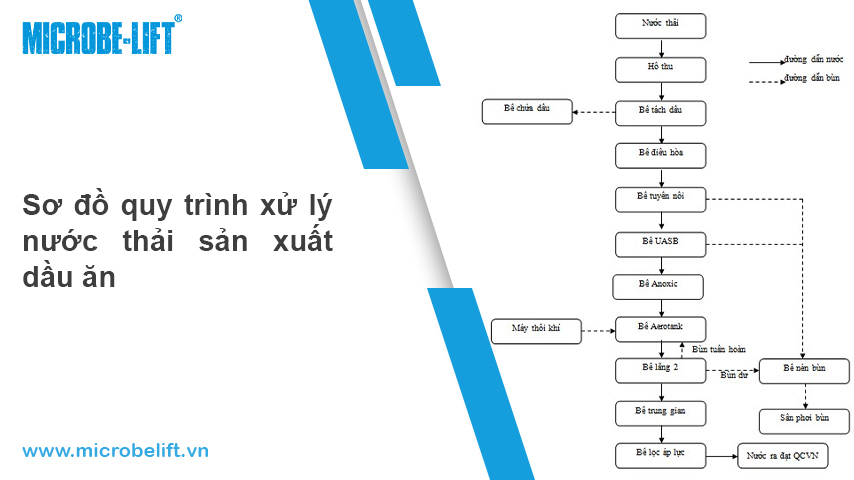
Biological technology is applied to treat wastewater from cooking oil production, typically AAO (Anaerobic – Anoxic – Oxic). For the process of treating wastewater from cooking oil production using AAO technology to be effective, there are 2 factors that need to be considered during operation:
- Good control of operating conditions
Operating conditions in each biological tank treating cooking oil production wastewater will be different, typically the dissolved oxygen concentration (DO):
- For aerobic tanks: DO > 2mg/l.
- For anaerobic tanks: DO = 0 mg/l.
- For anoxic tanks: DO < 0.2 mg/l.
In addition, other factors such as pH, alkalinity, nutrition, temperature, water velocity, etc. in each tank also need to be suitable for microorganisms to function and process pollutants.
- Add specialized microorganisms to speed up the process of treating pollutants.
Adding specialized microorganisms to each treatment stage will help increase the efficiency of each tank, thereby increasing the efficiency of the entire cooking oil wastewater treatment system. Commonly used microorganisms are:
- Grease treatment microorganisms: Add to the oil separator to treat oil in wastewater before sending it to the treatment system to treat pollutants.
- Anaerobic microorganisms: Added to the anaerobic tank to treat organic pollutants BOD, COD, reducing the load on the aerobic system.
- Ammonia Nitrogen Treatment Microorganisms: Add to anoxic tank to promote the nitrification process, converting Ammonia Nitrogen into Nitrate form.
- Nitrate-reducing microorganisms: Add to the aerobic tank to reduce Nitrate to free Nitrogen.
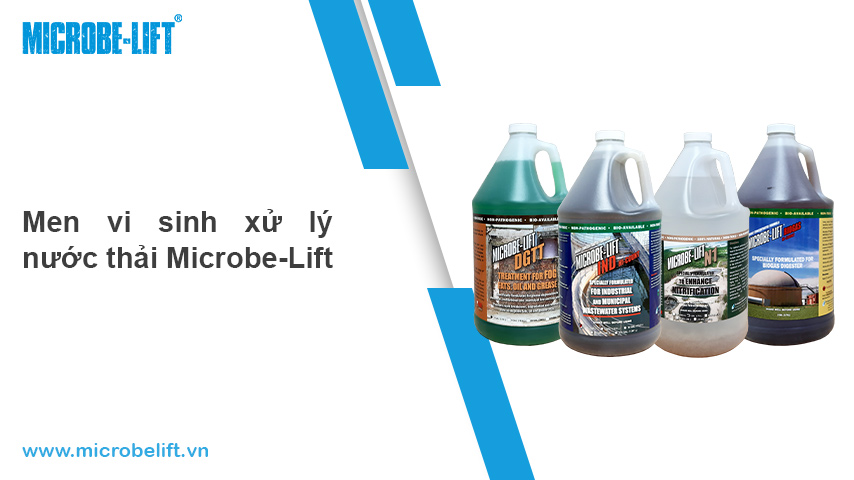
With exclusive production technology, Microbe-Lift wastewater treatment microorganisms are produced and preserved in liquid form, ensuring that the microorganisms are 5-10 times more active than conventional microorganisms, especially without activation and can be used directly in the wastewater treatment system.
Microbe-Lift probiotic strains suitable for treating cooking oil production wastewater are:
- Microbe-Lift DGTT Grease-Degrading Microorganisms .
- Microbe-Lift BIOGAS anaerobic treatment microorganisms .
- Microbe-Lift N1 Ammonia Nitrogen Treatment Microbe -Lift N1.
- Microbe-Lift IND. BOD, COD, TSS treatment microorganisms
Contact Biogency immediately via Hotline 0909 538 514 for detailed advice on the solution to treat wastewater from cooking oil production with Microbe-Lift probiotics today!