

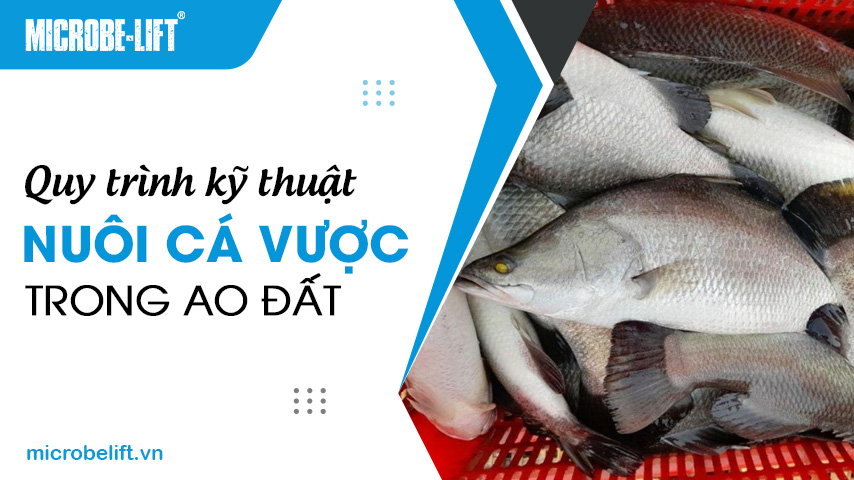
Raising sea bass in earthen ponds is becoming an aquaculture trend that many people are interested in thanks to the high economic efficiency and good adaptability of this fish species. Follow BIOGENCY to follow the article to discover scientific sea bass farming techniques, helping people achieve high productivity and optimal profits.
- What is sea bass? Habitat characteristics
- Technical process of raising sea bass in earthen ponds
- Using probiotics to increase the efficiency of raising sea bass in earthen ponds
What is sea bass? Habitat characteristics
Sea bass, also known as barramundi, has the scientific name Lates Calcarifer (Bloch, 1790), and is a fish species with high economic value. The prominent morphological characteristics of sea bass include a long body, a wide mouth with the upper jaw extending to behind the eyes. Adult fish can reach a maximum length of 200cm and weigh up to 60kg.
This fish species has a wide range of temperature and salinity tolerance, usually living in the middle and lower layers of shallow coastal seas or in brackish estuaries. The favorable conditions for fish growth are temperature 15-28°C, salinity 2-35‰ and depth 5-20m. In particular, sea bass can adapt well to freshwater environments, creating favorable conditions for sea bass farming in earthen ponds.

Technical process of raising sea bass in earthen ponds
To be successful in raising sea bass in earthen ponds, farmers need to master the technical process from pond design to harvest.
Pond design
The pond is designed in a rectangular or square shape with an area of 1,000-5,000m² for easy care and management. The pond depth ranges from 1.2-1.5m, ensuring the water level is always maintained at 90-120cm. The pond needs a separate water supply and drainage system for convenient water changes. The pond bottom must be flat and slope gently towards the drainage, creating favorable conditions for cleaning and harvesting.
Pond improvement and water supply
Before raising sea bass in an earthen pond, it is necessary to thoroughly renovate the pond. Drain the water, clean the mud and check the entire pond bank. Fill in leaks and holes around the bank, then apply lime to kill weeds at a dose of 10-15kg/100m2 . Dry the pond bottom for 3-7 days until the bottom surface cracks.
The water supply process must be done through a filter to prevent trash and miscellaneous fish. First, water is added to the pond about 0.3-0.4m to create water color. After 2-3 days when the water is green and plankton grows strongly, add water to 1.2-1.5m and then release fish.
Select and release sea bass breeds
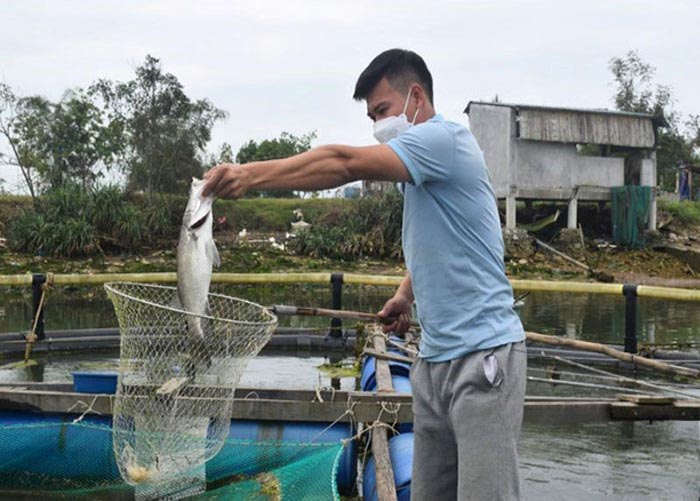
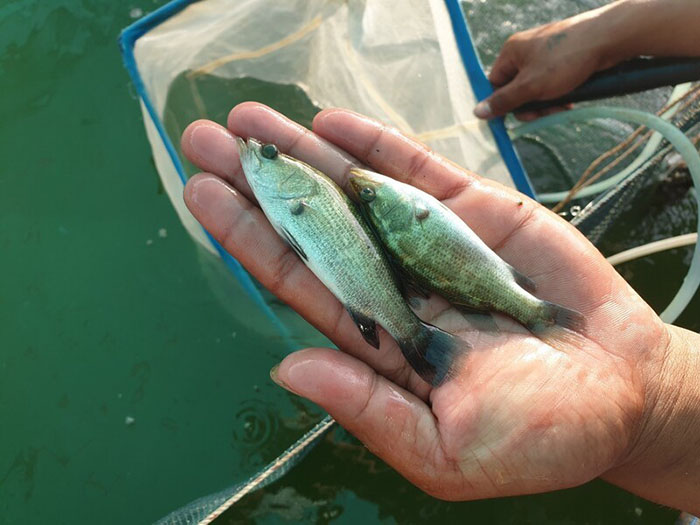
Selecting quality fish is the key to success in raising sea bass in earthen ponds. Fish must be of uniform size (8-10cm) to minimize loss due to cannibalism. Fish must be healthy, have natural color, no deformities, swim quickly and have good reflexes.
Before releasing the fish into the freshwater pond, it is necessary to acclimatize the fish from brackish water to freshwater for 4-5 days. The stocking density is 1.5-2 fish/m2 . Release the fish in the early morning or cool afternoon, avoiding days of heavy rain. Before releasing, soak the fish bag in the pond for 15-30 minutes to let the fish get used to the new environment.
Pond care and management during farming
The process of raising sea bass requires attention to periodic care and management of the pond for healthy fish growth. Monitoring water quality, pond hygiene and disease control helps increase productivity and reduce losses.
- Feeding: In the initial stage of raising sea bass in earthen ponds, feed the fish twice a day (8am and 5pm) with an amount equal to 10% of the fish weight in the pond. After the first 2 months, feed only once a day in the afternoon with 5% of the fish weight. You can use industrial feed or combine it with chopped trash fish.
- Pond management: Check the pond daily to grasp the situation and add water to maintain the water level at 1.2-1.5m. Change the water periodically every 3 days, each time 20-30% of the water in the pond to remove excess food. Observe and record environmental parameters such as temperature, dissolved oxygen, pH. Apply lime periodically every 15 days with the amount of 2-3kg/100m2 to treat water and prevent disease.

- Disease prevention and treatment: When raising sea bass in earthen ponds, it is necessary to pay attention to preventing common diseases such as diseases caused by protozoans, gill flukes and fish leeches. Maintaining stable water quality, choosing healthy fish, and raising at a reasonable density are effective disease prevention measures. When fish get sick, formalin or specialized chemicals can be used at recommended doses.
- Fish harvesting: After 8-10 months of raising, the sea bass can be harvested when they reach 0.8-1kg/fish. You can harvest them individually or use a dragnet to harvest them all. Before harvesting, let the fish fast for 1 day to make transportation safer.
Using probiotics to increase the efficiency of raising sea bass in earthen ponds
The application of probiotics to sea bass farming in earthen ponds is becoming a sustainable solution to help improve productivity and product quality.
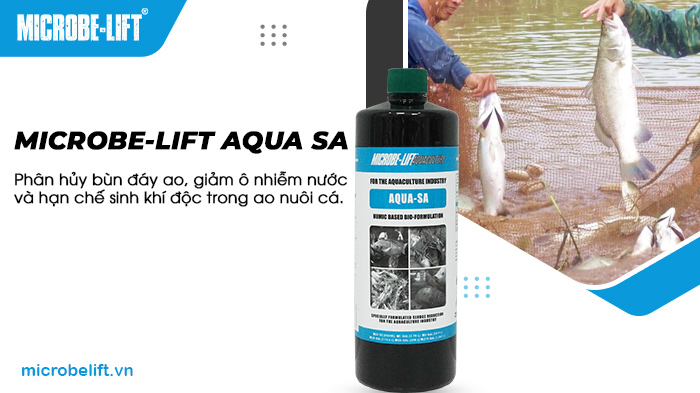
Microbe-Lift AQUA SA probiotics contain strong active microorganisms such as Bacillus Amyloliquifaciens, Bacillus Licheniformis, Bacillus Megaterium, Bacillus Subtilis . The product helps decompose pond bottom sludge, reduce water pollution and limit toxic gas production.
The recommended dosage is 100ml/time for a pond of 1000m3 of water, use periodically every 3 days. Note: Do not combine with disinfectants and store in a cool, dry place. How to use probiotics in raising sea bass in earthen ponds:
- Before stocking: Use to improve water quality and treat pond bottom.
- Rearing stage: Add to feed and spray into pond periodically.
- Pre-harvest: Reduce bottom sludge and treat impurities in water.
Raising sea bass in earthen ponds is a promising direction that brings high economic efficiency when applying the right techniques. From pond design, breed selection, care to harvest, every step needs to be done carefully and scientifically. For detailed advice on fish farming techniques and quality probiotic products, please contact BIOGENCY immediately via HOTLINE 0909 538 514 for detailed advice and the best support.
>>> See more: Prevention and treatment of some common diseases when raising barramundi