


Feeding black tiger shrimp properly and effectively managing the amount of feed used helps farmers reduce feed costs and at the same time reduce the risk of pollution in the farming area, which is one of the causes of shrimp disease.
- How to feed tiger prawns
- How to manage feed when raising black tiger shrimp
- Supplementing intestinal probiotics to keep black tiger shrimp healthy
How to feed tiger prawns
About the development stage
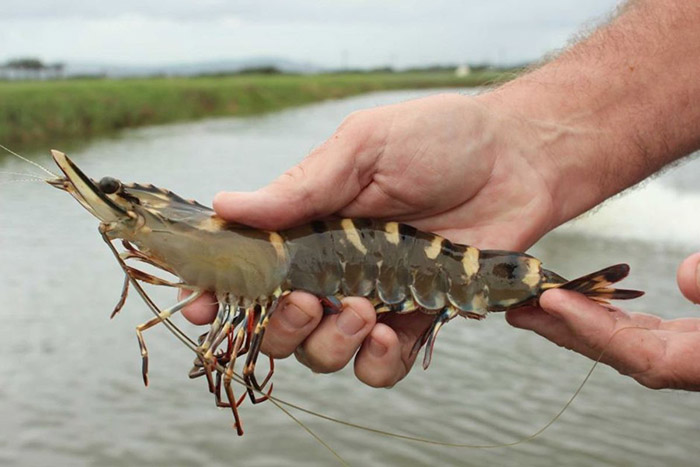
Feeding black tiger shrimp properly requires following the principles of quantity, quality, location and time. Depending on each stage of the shrimp, the feeding method will be somewhat different. For example:
- For 7-10 day old black tiger shrimp: Use fine powder feed. When feeding, turn off the water fan, then sprinkle into the pond 2-4m from the shore.
- For black tiger shrimp after 10 days old: Use small grain food, food should be put on a sieve placed 12-15cm away from the fan, ensuring that there is one feeding sieve for every 1,600-2,000m2.
- For 15-day-old black tiger shrimp: In addition to industrial feed, it is necessary to use additional vitamins, minerals, and probiotics to increase resistance and survival ability for shrimp ponds.
About dosage
For black tiger shrimp after being released into the pond, the prescribed dosage is 1.2-1.5 kg/100,000 juveniles, every 2 days it will increase from 0.2-0.3 kg/100,000 juveniles. Newly released shrimp should be fed 5-6 meals/day, after 30 days the shrimp should be fed 4 meals/day. During the rearing process, the dosage for black tiger shrimp can be adjusted down, for example when the weather changes, pH, pond water quality has problems, etc. During the molting cycle, it is necessary to reduce 20-25% of the feed for 2-3 days. If it rains continuously for many days, farmers reduce the amount of feed by 10-20%.
Notes when feeding giant tiger prawns
- In the first 2 months, food should be spread 3-4m near the shore. From the 3rd month onwards, food should be spread throughout the pond. Avoid spreading food on the dirty bottom of the pond and not close to the shore.
- When changing food (for example, changing from fine powder to granular form), farmers need to change slowly, and should mix it into food in small proportions so that the shrimp can adapt.
- Periodically supplement Vitamin C, digestive enzymes, minerals, liver supplements, etc. for shrimp from the early stages.
- Should use feeding sieve, feeding sieve helps check feeding, shrimp condition and is one of the effective ways to estimate shrimp survival rate.
- Feed should be moistened before being placed in the sieve and lowered slowly into the pond, avoiding letting the feed float off the sieve.
How to manage feed when raising black tiger shrimp
To manage black tiger shrimp feed, farmers need to monitor the amount of feed used. First, regularly check the weight and size of the shrimp according to each stage of development to know if the shrimp are lacking or having too much food, and then adjust accordingly. In addition, regularly check the shrimp feeding tray. The feed ratio in the tray is usually 2-3% of the amount of food in one feeding on the trays, the time to check the tray depends on the age and size of the shrimp.
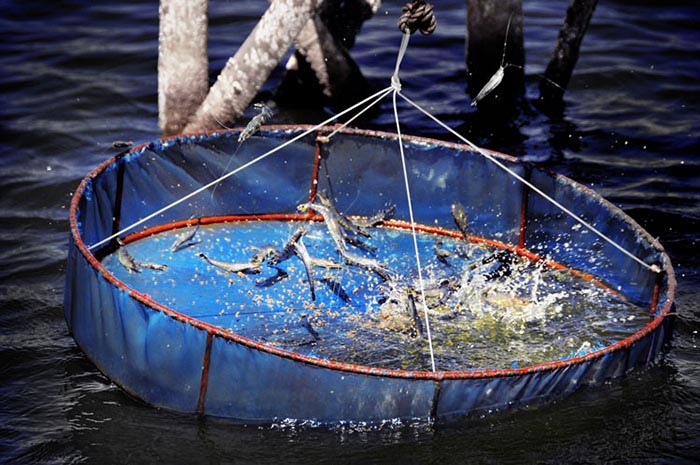
In the stage of large shrimp, the weight reaches 7-10g/shrimp, farmers combine checking the shrimp’s ability to catch prey with the amount of food remaining in the sieve after 1.5-2 hours of feeding, using a net to check. To check the ability to catch prey, farmers need to check the amount of food in the digestive system and periodically net the shrimp to take samples, observe the shrimp with the naked eye and the amount of shrimp caught can estimate the survival rate and individual weight of shrimp in the pond, from there calculate the amount of food needed for the shrimp.
Supplementing intestinal probiotics to keep black tiger shrimp healthy
In addition to feeding black tiger shrimp properly and managing feed effectively, farmers can supplement intestinal probiotics for shrimp. Experts from BIOGENCY suggest farmers the probiotic product Microbe-Lift DFM produced by Ecological Laboratories Inc., a leading microbiology company in the United States. Microbe-Lift DFM is the only product on the market that contains 4 strains of beneficial bacteria necessary for shrimp intestines including Bacillus Subtilis , Bacillus Pumilus , Bacillus Amyloliquefaciens and Bacillus Licheniformis .

Benefits of using Microbe-Lift DFM probiotics:
- Enhance intestinal health: The product helps enhance beneficial intestinal microflora, helping shrimp intestines to be large, beautiful, even, and uninterrupted.
- Reduce feed conversion ratio (FCR): Probiotics decompose feed to help shrimp digest and absorb nutrients easily, maximizing nutrients. Therefore, effectively reducing FCR and reducing feed costs.
- Reduce the risk of intestinal diseases: The product inhibits the growth of harmful bacteria, enhances shrimp immunity, prevents and minimizes the risk of intestinal diseases, especially white feces disease.
Microbe-Lift DFM probiotics are easy to use. Farmers just need to mix them into clean water in the correct dosage for tiger shrimp or mix them into food and then sprinkle them on the shrimp. Regular use helps keep the shrimp’s intestines healthy, increases productivity and significantly reduces feed costs, helping farmers have a bountiful harvest.
For more detailed advice on how to feed black tiger shrimp or use probiotics in shrimp farming, please contact HOTLINE 0909 538 514 .
Reference source: Vietnam Fisheries Magazine
>>> See more: Solutions to treat toxic gases for successful tiger shrimp farming