

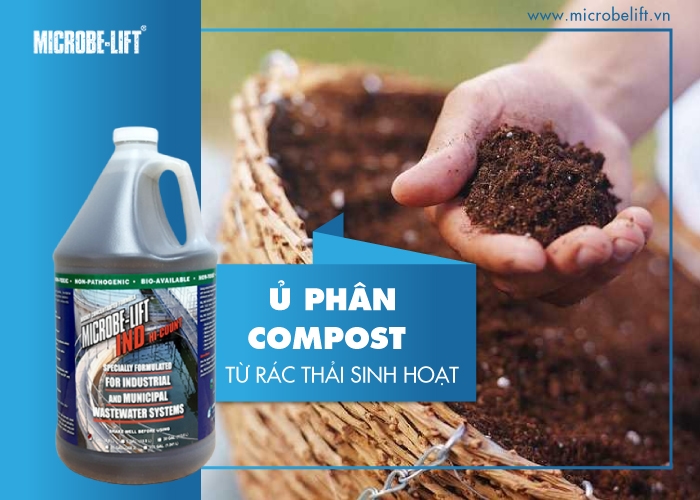
Nowadays, household waste is released into the environment in a significant amount, of which about 80% is organic waste. This is a very large proportion that makes it difficult for households to handle, from which the method of composting from household waste was born. Let’s learn about the process and the surprising effectiveness that this composting method brings with Biogency.
- Classify household waste before composting
- Composting process from household waste
- The effectiveness of the composting model from household waste
Classify household waste before composting
Household waste must be sorted immediately before starting the treatment process. This is one of the very important steps to optimize the waste treatment process later, because each household needs to pay attention to this step.
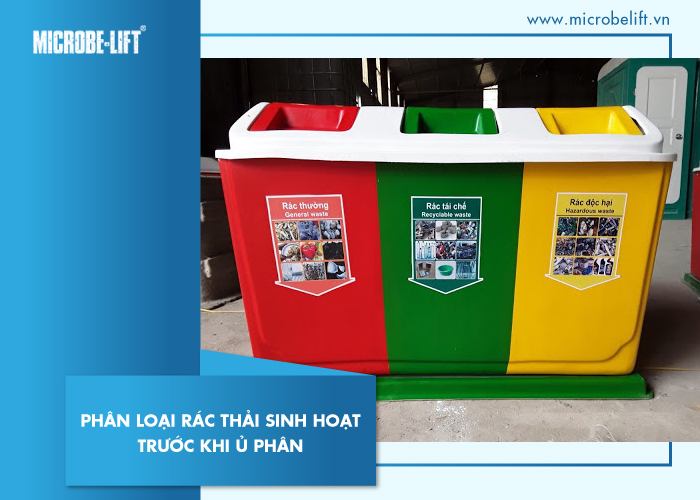
Form separate containers and classify them into groups as follows:
– Organic waste: this is a type of waste containing organic compounds that can be biodegraded in the natural environment based on living microorganisms (bacteria, worms, insects, etc.). Organic waste easily rots in a short time, and during the decomposition process, it can easily cause foul odors, such as leftover food, damaged organisms or plants (such as dead fish, vegetables, etc.), kitchen waste, spoiled fruit, fruit peels, etc.
– Inorganic waste: These are types of waste that cannot decompose in natural conditions, or can decompose but must take a very long time, for example: Porcelain, paper, PVC plastic, metals, glass, etc. Inorganic waste will be divided into 2 types: recyclable inorganic waste and non-recyclable inorganic waste.
- Recyclable inorganic waste: is household waste that can be reused many times directly, avoiding wasting fuel, for example: paper, cardboard, molten metal, plastic, etc.
- Non-recyclable inorganic waste: is in the group of household waste that cannot be recycled and can only be used once. For example, broken glass, animal bones, eggshells, used tissues, etc.
In addition to the two groups of waste mentioned above, there are other groups of hazardous waste such as: flammable and explosive substances (lighters, gas cylinders, etc.), corrosive substances (substances with high acidity and alkalinity), infectious substances (syringes, medical waste, hospitals, etc.), waste containing chemicals (batteries, pesticide containers, etc.). Usually, this type of waste is rarely present in the group of household waste, to treat it, we need to collect it in a separate treatment bin, transfer it to the environmental treatment department for treatment according to current procedures.
Improper waste classification and treatment will lead to environmental pollution, unsanitary and unsightly conditions – directly affecting people and the surrounding ecosystem.
Composting process from household waste
After the above classification process, the easily decomposed organic waste collected daily will begin the composting process. It is necessary to drain the organic waste before putting it in buckets or bags because water will make the decomposition process happen quickly and cause unpleasant odors. The composting process from household waste includes the following 3 steps
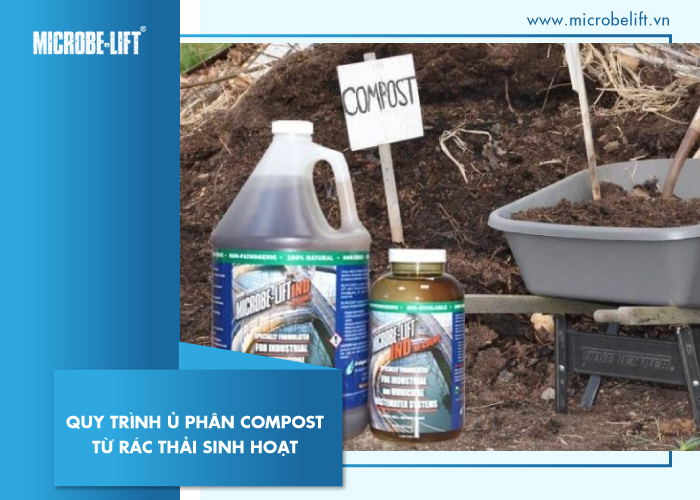
Step 1: Design a suitable compost bin and choose a suitable location for the bin
– Currently, round plastic compost bins with a capacity of up to 160 liters are widely sold on the market today.
– The walls of the bin have many small holes drilled at 10cm-13cm intervals. On both sides of the bin, there are 2 square 25cm doors drilled to receive compost.
– The compost bin should be placed far away from the source of domestic water, and a small container should be added to collect leachate from the waste. The leachate can be used to sprinkle back onto the waste, helping to increase the decomposition process – creating compost quickly.
Note: Leaves such as eucalyptus, cajuput, fresh lemongrass, and orange peel contain a lot of essential oils that inhibit the growth of microorganisms. Therefore, users should limit this type of waste.
Step 2: Control the composting process
Check humidity
+ If pressing organic waste shows too much water leakage, add more straw or dry grass to adjust the humidity.
+ If you see the waste sticking together and water dripping, then the required humidity is reached.
+ If you see that the garbage is not tightly bonded or does not leak, you need to add more water or decomposer microorganisms.
Using MICROBE-LIFT IND wastewater treatment microorganisms helps to treat odors and decompose waste quickly:
+ Spread the probiotics directly into the waste at 0.5 liters/m2 of surface, spraying repeatedly every 4-6 hours until the container no longer smells bad.
+ After about 10 days, mix and turn the fertilizer evenly from the inside out. During the turning process, make sure to control the humidity at 60% to avoid the fertilizer from drying out.
+ After about a month on average, organic waste will completely decompose into compost.
Check temperature
+ The temperature is checked by using fresh branches put directly into the compost mass. After about 1 week, remove the branches and touch them with your hand. If they feel very hot, it means the temperature is at the required level.
+ If the temperature does not increase, the cause may be due to insufficient humidity or lack of microorganisms.
=> To treat, we need to add water to add moisture, but too much water will lead to rotting and unpleasant odors. We advise you to use beneficial microorganisms from the product MICROBE-LIFT IND to solve the odor and add beneficial microorganisms to the decomposition process.
Take the compost out.
+ Compost will be formed at the bottom of the tank after 30 days, take the compost out from the 2 doors below.
+ The manure is dark brown, very fluffy, smooth, odorless, and can be released into the environment, specifically as fertilizer for vegetables, spread on the ground, etc.
+ In case the manure is still wet and not as smooth as required, you should put it back in the compost and mix it with decomposing waste (you should add hay and straw to reduce the humidity if the manure is still wet).
The effectiveness of the composting model from household waste
Nowadays, fertilizers play a very important role in agricultural cultivation, however, the excessive use of chemical fertilizers and pesticides will cause serious environmental pollution. By implementing the composting model from organic waste, farmers will reduce production investment costs, increase income, and limit harmful effects on the environment.
See more: Factors affecting composting
The advantage is that compost does not cause bad odors, especially it does not pollute the environment. This model has great significance for the social environment, for the good awareness of the people. Besides, it has profound significance for the economy, when the prices of raw materials are escalating every day – especially for the fertilizer industry.
_________________
For enthusiastic advice and support on the process of treating organic waste to create compost using the Microbe-Lift microbial enzyme , please contact us immediately at Hotline: 0909 538 514
References:
- Collecting, classifying household waste and composting organic waste – Soc Trang Province Center for Science and Technology Application
- Processing household waste into organic fertilizer – Ton Duc Thang University