

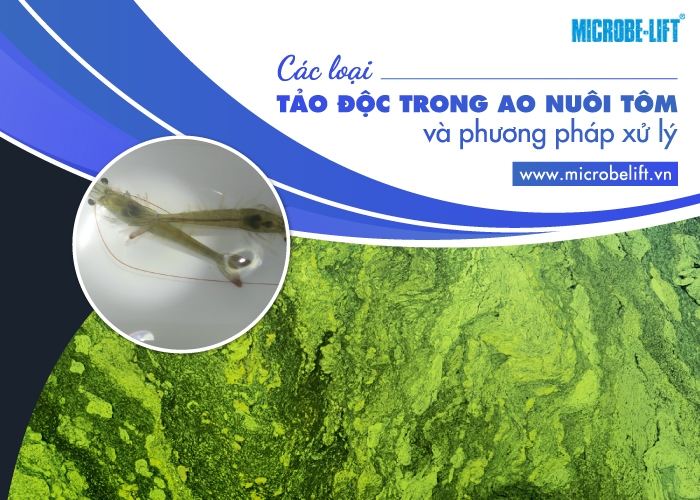
Algae include autotrophic organisms with one or more cells with simple structure, often have diverse colors and always contain chlorophyll. In addition, these are organisms with body walls containing cellulose, containing chlorophyll and photosynthesize thanks to light and CO2. So what are toxic algae? How to control toxic algae in shrimp ponds?
- What is toxic algae?
- Some common harmful toxins in shrimp ponds
- Causes of toxic algae in shrimp ponds
- Methods of treating toxic algae in shrimp ponds
What is toxic algae?
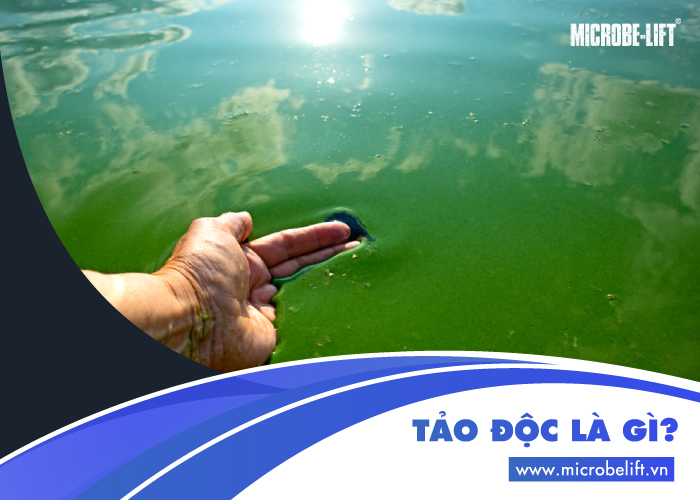
Toxic algae are algae that directly or indirectly affect aquatic animals, such as: Blue-green algae, Dinoflagellates, Eye algae, etc. They often secrete toxins that cause diseases in shrimp, and directly affect the quality of shrimp farming water, making shrimp susceptible to pathogens.
Reference: Cutting algae with high efficiency microorganisms
Some common harmful toxins in shrimp ponds
Blue-green Algae
Oscillatoria and Microcystic are two types of Cyanobacteria that commonly appear in ponds.
How to identify ponds with blue-green algae:
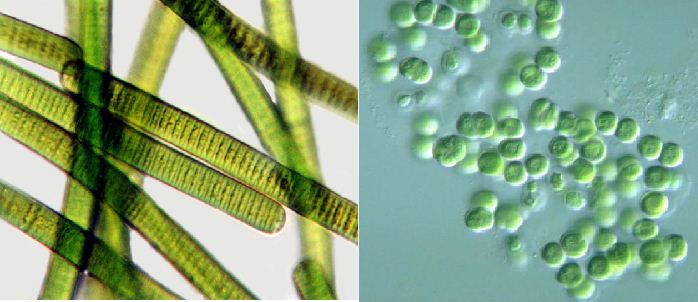
- Microscopic observation: 2 pictures above
- Visually: If Blue-green algae appear in dense density, you can easily see the tiny particles with your eyes, the pond water will usually be blue, turquoise, scum and have a foul smell. Old Blue-green algae will be in the form of granules or filaments, they often secrete mucus into the water and can clog shrimp gills.
- Ponds with too high a density of cyanobacteria will cause shrimp to suffer from intestinal diseases.
- Filamentous Blue-green algae will hinder the respiration of shrimp.
Farmers can refer to ways to kill blue-green algae in shrimp ponds to avoid the negative effects of blue-green algae on shrimp.
Euglenophyta
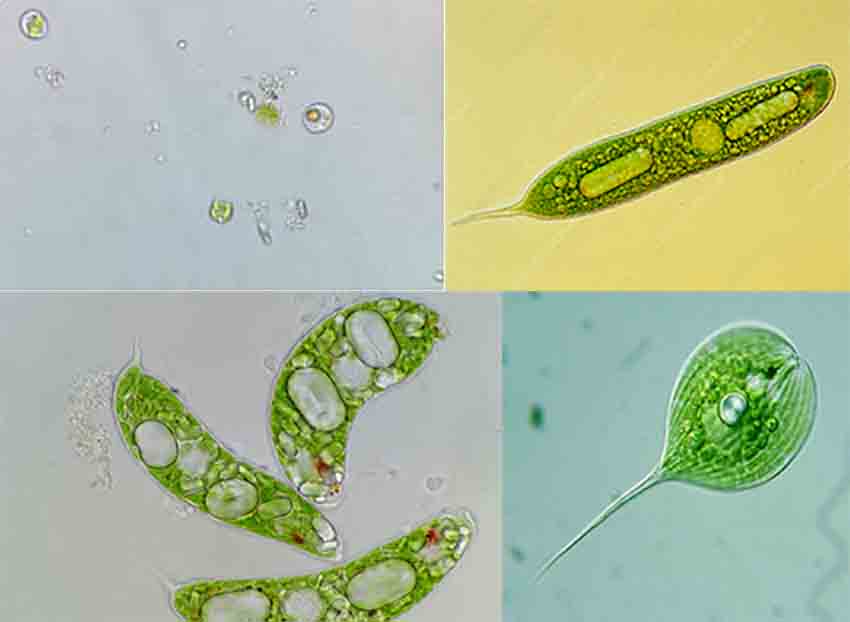
When Eye algae appears, it shows that your pond is polluted with organic matter or the pond bottom is contaminated.
Identifying Eye Algae in Ponds:
- Eye Algae are commonly distributed mainly in freshwater environments and are rarely found in shrimp ponds.
- When algae grows at high density, pond water is often dark brown or green.
- When observed under a microscope: The eye algae moves very quickly in water thanks to the flagella located at the front end. The single-celled algae body has a red eye spot.
Pyrrophyta
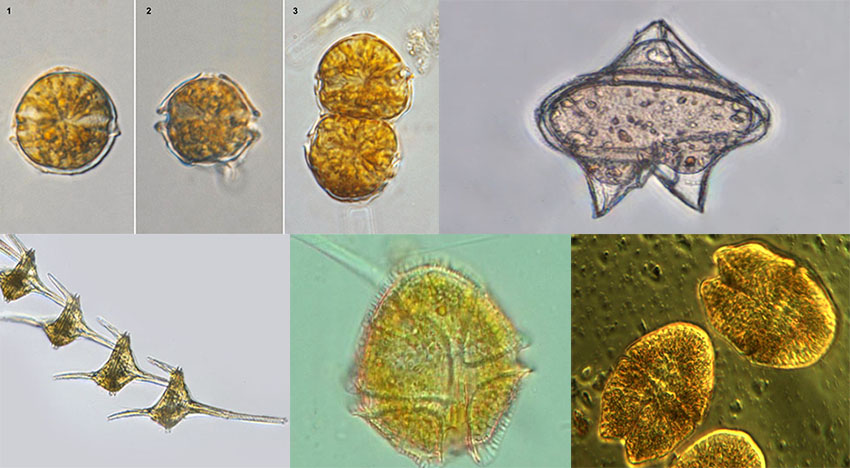
If shrimp eat this type of algae, it will cause indigestion, affect the digestive system, leading to fragmented feces disease. This is the cause of the glowing phenomenon in shrimp ponds. Dinoflagellates are also a factor that makes shrimp surface at night due to lack of oxygen in the water.
Identifying dinoflagellates in ponds:
- Microscopic observation: Algae molecules will be black like suspended particles, with spines and gaps in the middle of the cell.
- To the naked eye, when algae are at high density, the water will appear reddish brown, yellowish brown or dark tea color, causing the pH to fluctuate day and night.
Causes of toxic algae in shrimp ponds
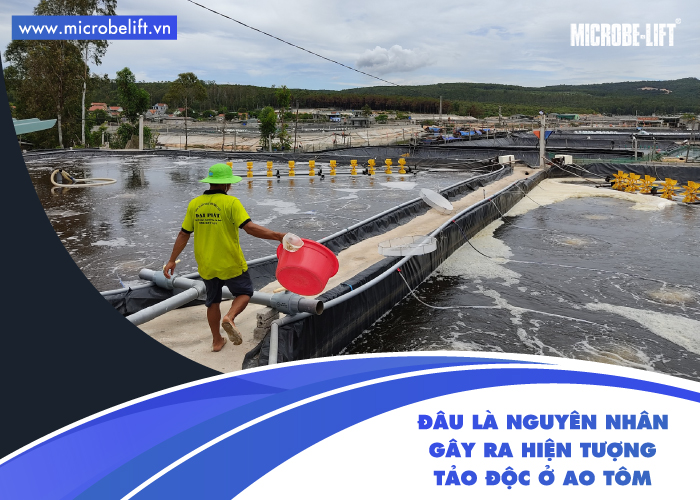
Organic pollution in aquaculture ponds is the main cause of toxic algae growth.
- Unscientific management of shrimp feed causes feed to accumulate at the bottom.
- Shrimp waste is discharged during the farming season.
- Do not renovate the pond, causing the bottom to become dirty.
Prolonged hot or rainy weather (unpredictable weather)
- When it rains for a long time, the salinity in the pond will decrease rapidly and the water will stratify, thereby creating conditions for algae to grow.
- Prolonged hot weather accompanied by sudden thunderstorms will change the environmental factors in the pond, causing the decomposition of organic matter to increase -> thereby creating more nutrients, creating conditions for harmful algae to grow in shrimp ponds.
Methods of treating toxic algae in shrimp ponds
Manage algae when they grow excessively.
- Proceed to collect dead algae
- Change the pond water if there is a settling pond.
- Control the amount of food appropriately, avoid excess.
- Use probiotics to treat the environment, combine with molasses and ferment for 3-6 hours at night.
- Cut algae with lime at a dose of about 20kg/1000m3 of pond water. After lime application, use zeolite at a dose of 20kg/1000m3.
- Conduct regular sludge suction and bottom siphoning.
- Use of CuSO4 based algaecide chemicals
- Release tilapia with shrimp into the pond. Tilapia often look for food in the middle and bottom water layers, they can digest 30-60% of protein in algae, especially blue-green algae, green algae, etc.
Algae management during dieback
- Quickly remove dead algae
- Perform regular bottom siphoning
- Check and quickly adjust domestic parameters
- Provide oxygen tablets combined with fan operation to promptly supplement oxygen for shrimp.
- Replace 30% of the water in the pond if there is a settling pond.
- Directly reduce 30-50% of food intake to easily adjust water quality.
Reference: Details on how to handle algae blooms
Pond management when lacking algae
- The case of algae deficiency in ponds occurs when the water is cloudy, poor in nutrients, the suspended organic matter content in the pond exceeds the threshold,…
- It is advisable to use comprehensive measures to aid sedimentation and provide nutrients to color the water in shrimp ponds.
Farmers can refer to the 3 most useful ways to kill algae in shrimp ponds to help kill algae, stabilize water, keep shrimp healthy and increase productivity.
____________
Managing toxic algae in shrimp ponds will become simple if farmers detect early and have the right treatment measures. Hopefully the above sharing can help farmers to thoroughly resolve toxic algae in the pond effectively. For more detailed advice and support, please contact us immediately via HOTLINE : 0909 538 514
References:
- Algae in shrimp ponds and how to fix them – Directorate of Fisheries
- http://www.fao.org/3/ac006e/AC006E11.htm#ch11.1
- Phytoplankton in aquaculture ponds – CLAUDE E. BOYD, PH.D. Department of Fisheries and Allied Aquacultures Auburn University