

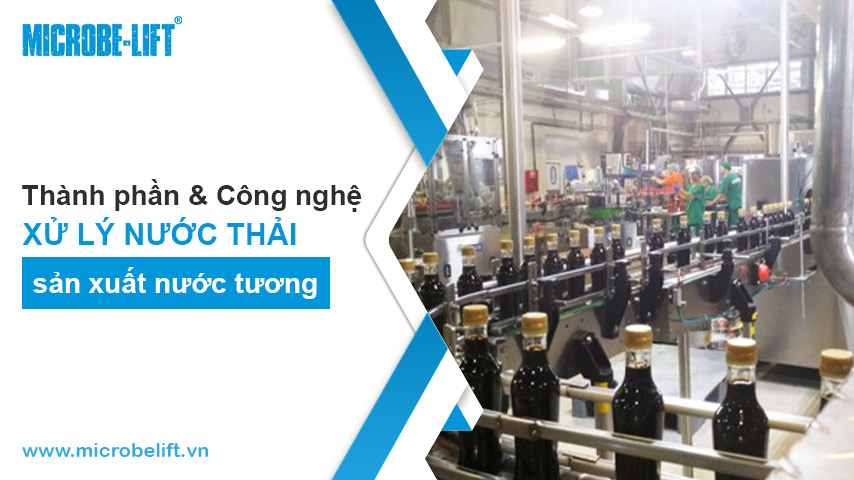
Soy sauce is an indispensable condiment in many family kitchens, and therefore the demand for the production of this condiment is increasing day by day. This has led to an increasing amount of wastewater, putting pressure on the wastewater treatment systems of many factories, especially when environmental protection regulations are increasingly tightened. So how to treat wastewater from soy sauce production to meet QCVN 40:2011/BTNMT standards? Please read the article below with Biogency.
- Origin of wastewater from soy sauce production
- Composition of wastewater from soy sauce production
- Current technology for treating wastewater from soy sauce production
Origin of wastewater from soy sauce production
The soy sauce production process goes through many stages, including cleaning raw materials, soaking, steaming, cooling, mold cultivation, mixing raw materials, fermenting raw materials, hydrolysis, mold inhibition, extraction-filtration, blending, pasteurization, natural sedimentation-fine filtration, bottling-labeling. With many stages mentioned above, the amount of wastewater generated from the soy sauce production process is quite large, mainly coming from the following stages:
- Soak, wash and clean ingredients.
- Steam the ingredients.
- Mix ingredients.
- Bottling and labeling.
- Clean bottles and packaging.
- Cleaning machinery and equipment.
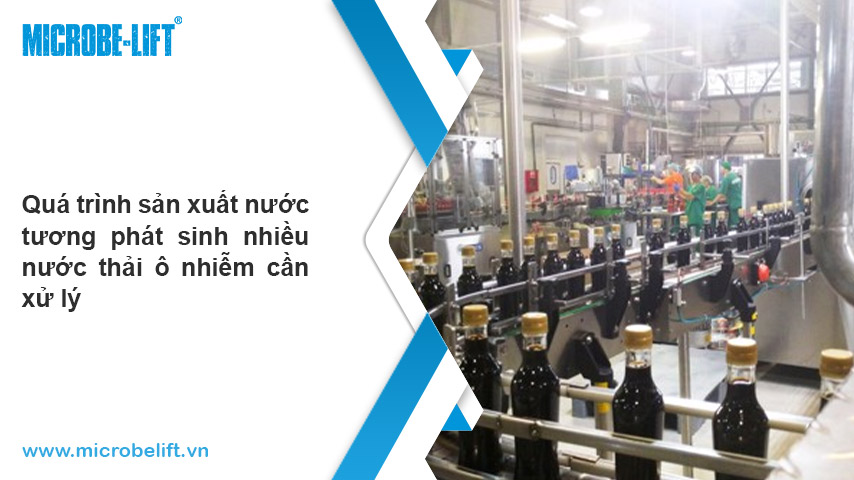
Besides wastewater from the production process, soy sauce factories/plants also generate a lot of wastewater from the daily activities and hygiene of production workers.
Composition of wastewater from soy sauce production
With the production process going through many stages, soy sauce production wastewater has high salt concentration with complex composition:
- Organic substances in wastewater (accounting for about 50-60%), including organic substances from raw materials and waste from human excretion activities.
- Inorganic substances in wastewater (accounting for about 40-42%), including soil, sand, etc.
- Surfactants such as synthetic detergents…
- Microorganisms such as bacteria, viruses, fungi, algae, worms…
Below is an example table of the input wastewater composition of a current soy sauce production wastewater treatment system:
| Indicators | Unit of measurement | Inlet wastewater concentration | QCVN 40:2011/BTNMT, Column B |
| pH | – | 4.1 | 5.5-9 |
| SS | mg/l | 109 | 100 |
| BOD5 | mg/l | 356 | 50 |
| COD | mg/l | 549 | 150 |
| Total Phosphorus | mg/l | 22 | 6 |
| Total Nitrogen | mg/l | 431 | 40 |
| Ammonia (NH4+) | mg/l | 118 | 10 |
| Coliform | MPN/100ml | 11×10^4 | 5000 |
Current technology for treating wastewater from soy sauce production
With the nature of wastewater being mostly organic substances, the most effective technology to treat this wastewater is biological technology with a typical treatment process diagram as follows:
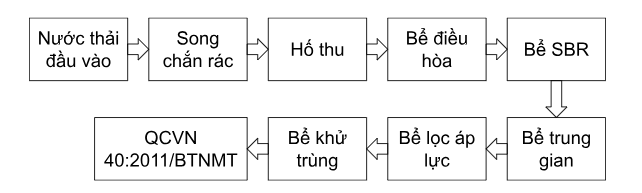
Detailed description of the processing procedure:
- Wastewater passes through a trash rack to remove impurities and large solid waste, then flows into a collection pit and through an equalization tank.
- At the equalization tank , the mixing system will be operated to mix the wastewater, the purpose is to mix the pollutants evenly and prevent the wastewater from organic decomposition. At the same time, at the equalization tank, pH-raising chemicals are also used to rebalance the pH of the wastewater, because the input soy sauce wastewater has a quite low pH, this happens because in the production process there is a stage of using acid to hydrolyze the raw materials.
- Next, the wastewater will be sent to the SBR tank – this is the main tank used to decompose organic pollutants in wastewater. The SBR tank treats wastewater by biological methods, using microorganisms to decompose organic substances, the reaction processes occur in only one tank and the wastewater is treated in batches. The batch reaction process is continuous with 5 phases, including: filling – reaction – sedimentation – draining – condensation). The wastewater after being treated in this tank basically meets the criteria such as BOD, COD, TSS, Nitrogen, Ammonia, Phosphorus. Then the wastewater will be transferred to the intermediate tank to contain the wastewater and gradually lead to the pressure filter tank.
- At the pressure filter tank , the wastewater will be removed again to remove any remaining residue. The clear water after filtration will be passed through the disinfection tank.
- The disinfection tank is responsible for treating remaining microorganisms to ensure that the output wastewater meets the requirements for both pollutants and Coliform according to QCVN 40:2011/BTNMT.
To improve the efficiency of soy sauce wastewater treatment with the above technological process, the wastewater treatment system operation process should add to the SBR tank the Microbe-Lift IND probiotic strain – containing 13 strains of highly active microorganisms in liquid form, helping to increase the density of microorganisms in the tank so that the process of treating pollutants takes place faster and more effectively.
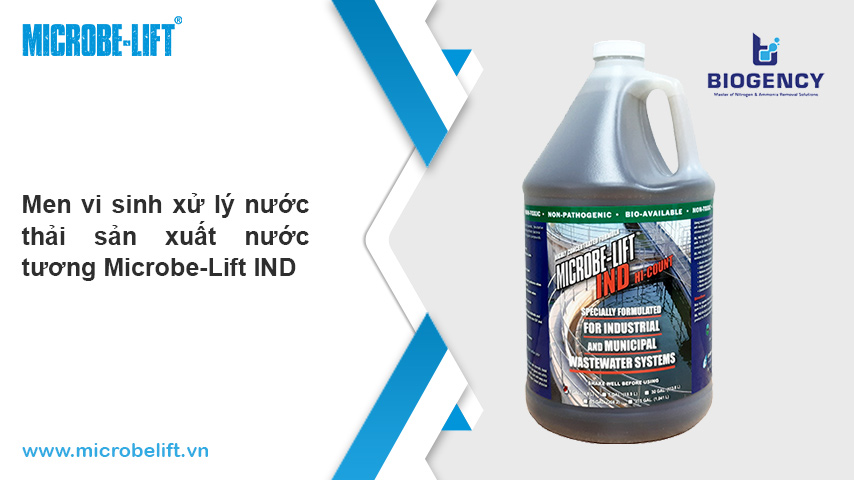
Advantages of Microbe-Lift IND:
- Strong in handling BOD, COD, TSS and Nitrate reduction.
- Able to withstand high input wastewater volume, helping to reduce the death of microorganisms due to shock load.
- Ability to quickly restore the microbiome after the soy sauce wastewater treatment system has problems.
If your soy sauce wastewater treatment system is having problems during operation, please contact Biogency immediately via Hotline 0909 538 514, we will support, advise and provide the fastest solution!