

To successfully treat wastewater from an alcohol processing plant, it is necessary to combine many different methods to treat the output wastewater to meet the prescribed standards (according to QCVN 60-MT:2015/BTNMT: National technical regulation on wastewater from fuel alcohol production).
- Current status of alcohol production in Vietnam
- Composition of alcohol production wastewater
- Technological process of wastewater treatment of alcohol processing plant
Current status of alcohol production in Vietnam
Alcohol (also known as Ethanol, Ethyl Alcohol), has the chemical formula C 2 H 5 OH, is a colorless liquid with a characteristic odor and a spicy taste. Alcohol can exist in liquid or solid form, and is infinitely soluble in water.
Alcohol is widely used in many different fields, for example:
- In medicine: Alcohol is often used to disinfect wounds, as an ingredient in making medicine (liquid alcohol over 90%); and to clean medical instruments (liquid alcohol over 70%).
- In cosmetics production: Alcohol is an ingredient to produce toner (rose water), makeup remover, etc. There are 2 types of alcohol commonly used: fatty alcohol or dry alcohol.
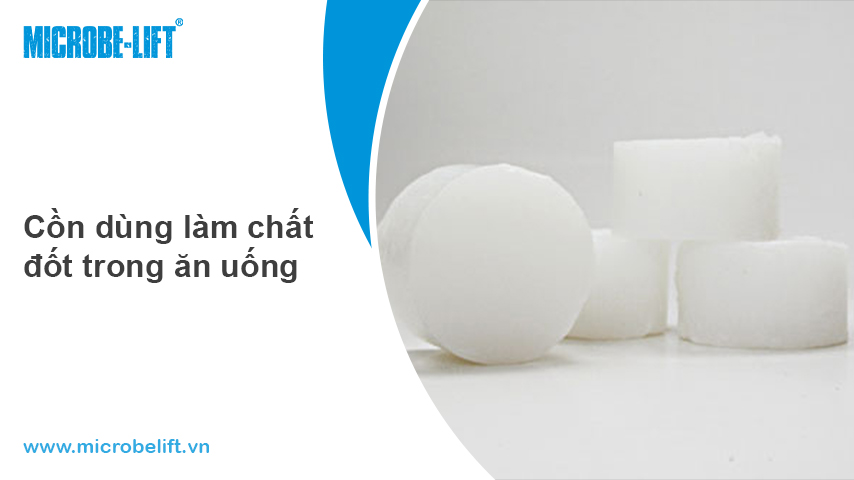
- In food and drink: Alcohol is used as fuel, for example in alcohol stoves and food cookers. The type of alcohol commonly used is solid alcohol.
Because the demand for alcohol in daily life is quite high, the amount of alcohol produced is also increasing, and the problem of wastewater treatment is also a headache for businesses when increasing production.
Composition of alcohol production wastewater
Raw materials for alcohol production are mainly from compounds containing sugar, polysaccharides or starch (such as rice, cassava starch…) plus water and yeast. Therefore, wastewater from the alcohol production industry contains many organic pollutants with high content, especially COD. If the alcohol production process uses starch as raw material, the COD content can range from 20,000 – 25,000 mg/l, the BOD/COD ratio from 0.23 – 0.66. If the alcohol production process uses molasses as raw material, the COD content can range from 90,000 – 120,000 mg/l, the BOD/COD ratio from 0.39 – 0.67. In addition, wastewater also contains high levels of Nitrogen (350 – 400 mg/l), Phosphorus (60 – 80 mg/l), SS (9,000 – 12,000 mg/l).
In addition, wastewater generated from alcohol processing plants also has certain characteristics:
- The pH is quite low, only from 4.2 – 4.5.
- The wastewater temperature is quite high due to the distillation and heat treatment process during production, from 75 – 85 degrees Celsius.
- Wastewater is often milky white due to containing a lot of starch.
With such characteristics, the treatment of wastewater from alcohol processing plants also brings certain difficulties to businesses:
- Low pH limits microbial growth in biological wastewater treatment systems.
- High temperatures also affect microbial life and increase environmental damage.
- Waste water is milky white and can easily damage pipes.
Technological process of wastewater treatment of alcohol processing plant
To successfully treat wastewater from an alcohol processing plant, it is necessary to combine many different methods to treat the output wastewater to meet the prescribed standards (according to QCVN 60-MT:2015/BTNMT: National technical regulation on wastewater from fuel alcohol production).
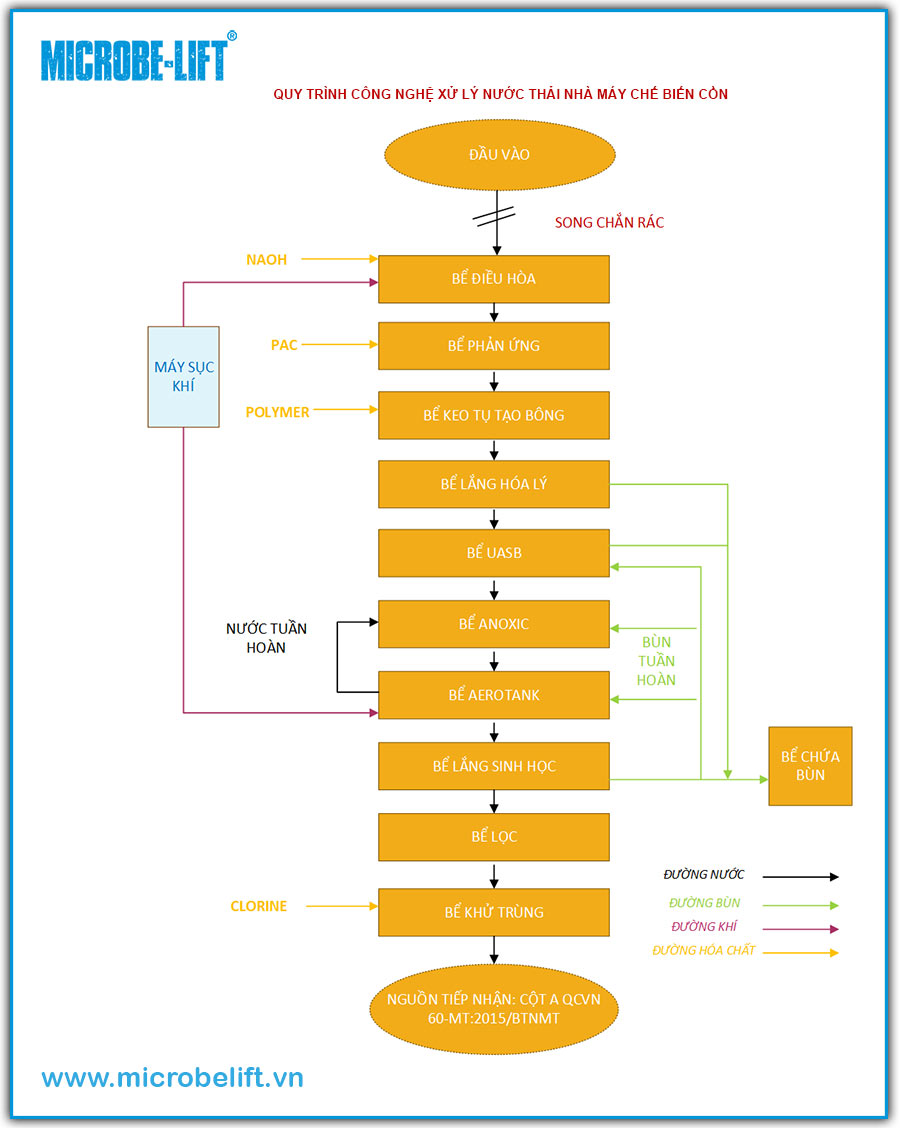
The technological process for effective treatment of alcohol processing plant wastewater is a combination of physical chemistry and biology. The specific technological treatment process diagram is as follows:
In there:
- The equalization tank has the task of regulating the wastewater flow and balancing the pH and temperature of the wastewater.
- The physicochemical treatment system consists of 3 tanks: reaction tank, coagulation-flocculation tank and physicochemical sedimentation tank, which are responsible for removing suspended solids and starch in wastewater.
- The biological treatment system consists of 3 tanks: UASB tank, Anoxic tank and Aerotank tank, which are responsible for treating organic pollutants (COD, BOD, Nitrogen, Phosphorus). The specific tasks of each tank are:
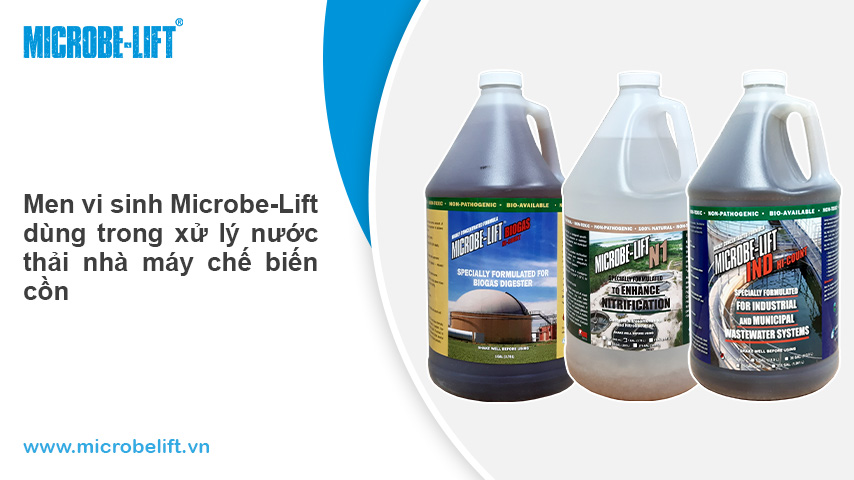
- UASB tank: Treats high concentrations of COD to reduce the load on the aerobic treatment system (Aerotank). To increase the COD treatment efficiency in this tank, the operating engineer can add anaerobic microorganisms, found in Microbe-Lift Biogas yeast.
- Anoxic Tank: Treats Ammonia Nitrogen and converts it to Nitrate. Ammonia Nitrogen is a difficult indicator to treat in most types of wastewater because there are very few microorganisms that can handle this indicator. The two microorganisms considered to be most effective in converting Ammonia Nitrogen up to now are Nitrosmonas and Nitrobacter (found in the Microbe-Lift N1 probiotic product).
- Aerobic tank: Treats the remaining COD and BOD concentrations and conducts Nitrate removal to bring the wastewater to the prescribed output standards. To increase the BOD and COD treatment efficiency to 85%, it is necessary to add to the system Microbe-Lift IND – containing 13 strains of strong active microorganisms (including strains that treat BOD, COD and Nitrate removal).
After the biological treatment stage, in order for the alcohol processing plant wastewater to be discharged into the environment or reused, it needs to go through several next steps of sedimentation, filtration and disinfection to remove sludge and bacteria.
Reference: Standard beer factory wastewater treatment
Above is the information Biogency shares about alcohol processing plant wastewater treatment. If your alcohol processing plant wastewater treatment system is having difficulty meeting output targets, please contact us via Hotline 0909 538 514 for the fastest support!