
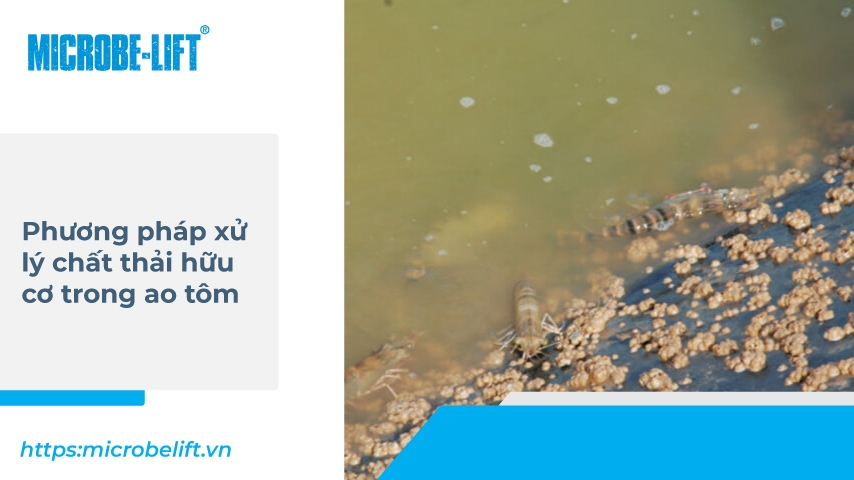
One of the causes of water pollution in shrimp ponds is organic waste generated during the farming process. Therefore, most whiteleg shrimp farms today focus on treating organic waste in shrimp ponds to improve crop productivity and avoid other risks and losses. In the article below, Biogency will introduce to farmers the components, causes of generation and harmful effects as well as methods of treating organic waste in shrimp ponds.
- Causes and composition of organic waste in shrimp ponds
- Harmful effects of organic waste in shrimp ponds
- Methods of treating organic waste in shrimp ponds
Causes and composition of organic waste in shrimp ponds
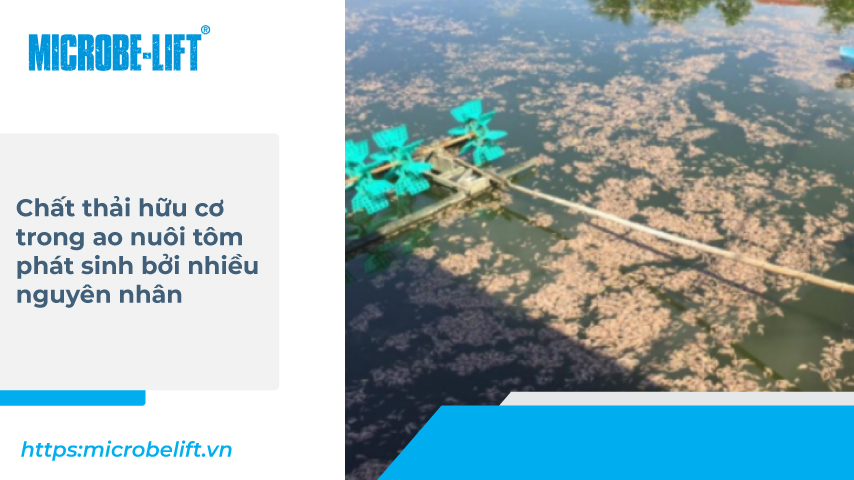
Causes:
- The flow of water erodes the soil around the pond.
- The pond bank soil is being washed away.
- Shrimp leftover food accumulates at the bottom of the pond.
- Shrimp excreta are discharged into the pond environment.
- Lime and mineral residue.
- The dead body of a creature floats in the pond.
- Suspended matter in water supply.
Ingredient:
- Mainly nitrogen and phosphorus. According to statistics, about 63 – 78% of nitrogen and 76 – 80% of phosphorus fed to shrimp are lost into the shrimp pond environment.
- Nitrogen in the form of protein is absorbed by shrimp and excreted as ammonia.
- Residues of antibiotics, pharmaceuticals, therapeutic drugs…
Harmful effects of organic waste in shrimp ponds
Organic waste causes a lot of damage to ponds, including:
Accumulation of toxic gases in the pond
Organic waste when generated in the pond will cause H 2 S and NH 3 gas to appear . Specifically, NH 3 is produced from the excretion process of shrimp and nitrogen decomposition in anoxic and anaerobic conditions. Meanwhile, H 2 S gas originates from organic waste that settles in the pond under anaerobic decomposition conditions.
In case H2S is present in the pond at high concentration, it can be recognized by the characteristic smell of rotten eggs that is harmful to shrimp, diseases such as liver necrosis, intestinal disease, white spots may appear… Besides , it also quickly reduces water quality at the end of the farming cycle.
Reference: Toxic gases in shrimp ponds
Toxic algae growth in ponds
When the amount of organic waste in whiteleg shrimp ponds accumulates too much, it will create favorable conditions for toxic algae to grow. Harmful blue-green algae will then produce and grow to replace diatoms (silica algae), causing harm to the pond water environment.
Reference: Types of toxic algae in shrimp ponds
Causes dissolved oxygen deficiency in shrimp ponds
Dissolved oxygen plays an important role in the respiration process of shrimp. The accumulation of large amounts of organic waste in shrimp ponds often causes a decrease in dissolved oxygen in water. Specifically, the accumulation of carbon dioxide and organic compounds will reduce dissolved oxygen and increase BOD, COD, hydrogen sulfide, ammonia and methane content in natural water. This makes it difficult to decompose organic matter because shrimp ponds need a certain amount of oxygen for effective decomposition.
Water pollution
Organic waste in shrimp ponds is one of the leading causes of pond water pollution and environmental pollution when discharged into the environment. Specifically, it kills organisms in the aquatic environment and causes respiratory diseases, pneumonia, and cancer in humans if exposed to contaminated water for a long time.
The above mentioned main harmful effects are the cause of dangerous diseases for white leg shrimp, reducing resistance, anorexia… Common dangerous diseases are shrimp gill atrophy, tail rot, antennae truncation… causing great economic losses. Therefore, farmers need to have appropriate methods of treating organic waste in shrimp ponds to protect shrimp health and meat quality.
Methods of treating organic waste in shrimp ponds
To effectively treat organic waste in shrimp ponds, Biogency encourages farmers to apply the following methods:
Use of settling ponds
This is one of the commonly used methods to treat organic waste in shrimp ponds. Accordingly, pond water containing waste will be transferred to a settling pond through a separate channel. Next, the water will be left to settle in a separate pond for a period of time, thereby retaining suspended solids and organic waste instead of being discharged into the environment. The wastewater will then be discharged through the outlet channel. For this method, the ideal settling pond size varies between farms, but will generally be from 10% – 15% of the total pond size.
Prepare the pond carefully before releasing the fry.
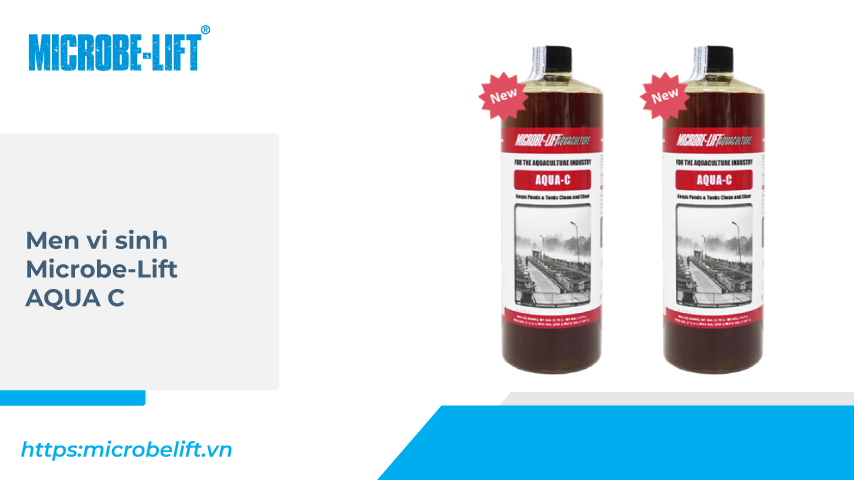
To avoid affecting the next crop, before starting to release shrimp, farmers need to treat organic waste in shrimp ponds by wet or dry renovation depending on pond water conditions. In the case of wet renovation, this method often cannot handle thoroughly, so in addition to using lime, farmers should use the product Microbe-Lift AQUA C probiotic to clean pond water and decompose excess food. The product includes isolated and cultured microorganisms in liquid form, which are 5 to 10 times more active than conventional microorganisms and are recommended by experts in treating organic waste in pond water and shrimp ponds.
Reference: Preparing ponds for whiteleg shrimp farming
Pay close attention to the color of the pond water.
The process of creating water color to create silica algae in the pond is very important, contributing to increasing the quality of pond water and eliminating toxic gases in the water. If the pond water color is brick red or dark brown, it shows that the pond is polluted and accumulates a lot of organic waste that needs to be treated immediately. In addition, if the pond water color is bad, it will produce toxic algae that are harmful to shrimp health such as eye algae, dinoflagellates, so it is necessary to pay attention to cleaning and creating color in the pond water effectively to decompose organic waste and harmful microorganisms. However, the process of maintaining good algae color in the pond is not easy. This requires shrimp farmers to have certain qualifications and experience to maintain the color of algae and water to balance the water environment of shrimp ponds. The most effective method of creating color in shrimp ponds is to use Microbe-Lift AQUA C microorganisms in the following way:
- Mix 100ml of Microbe-Lift AQUA C probiotics with 20-50 liters of pond water and 3 liters of clean molasses (does not contain disinfectants). Then stir well and aerate continuously for 24 hours, enough to treat 1,000 cubic meters of water.
- Continuously use microorganisms with the above dosage within 3 days. After that time, the pond water will be successfully colored for farmers to proceed with stocking.
- After releasing shrimp, farmers should use microorganisms with the following maintenance dosage:
+ From day 1 to day 30: Use 1-2 times/week.
+ From day 30 to day 60: Use 2 to 3 times/week.
+ From day 60 onwards: Use 3 to 4 times/week.
Shrimp feed management
Choosing the type of feed and regularly managing the amount of feed in shrimp ponds is important for the existence of organic waste in the pond. If the quality of feed is poor, the feed conversion factor into meat will increase, or the feed will dissolve quickly in the water, making it impossible for shrimp to digest all the feed, leading to excess feed in the pond. Therefore, farmers need to pay attention to choosing quality feed and using a reasonable amount of feed to avoid excess and accumulation, polluting the water source.
Reference: How to calculate the amount of food for shrimp
Select water source
The water source in shrimp ponds also affects the amount of organic waste accumulated in the pond. If the water source contains a lot of residue, suspended matter and toxic substances, it will affect the health of whiteleg shrimp, shrimp are susceptible to intestinal and liver diseases. Specifically, white feces disease – causes the organic waste of shrimp to increase and accumulate in large amounts in the pond. Therefore, when farmers choose water to supply to the pond, they must pay attention to choosing water sources with little suspended matter, no algae and low salinity.
Remove organic waste and bottom sludge in shrimp ponds with Microbe-Lift AQUA SA probiotics combined with Microbe-Lift AQUA C probiotics
To thoroughly treat organic waste in shrimp ponds, it is necessary to regularly check and manage the pond water quality well, reducing waste sedimentation. The first step in treating organic waste in shrimp ponds is to use Microbe-Lift AQUA C probiotics, a product recommended by experts and effective in decomposing organic matter in shrimp ponds, contributing to cleaning pond water. The product contains isolated strains of microorganisms with the ability to decompose shrimp and fish excretions, inhibit pathogenic microorganisms and balance the ecological environment of the pond, helping farmers improve the quality of pond water and prevent the accumulation of organic waste in the water.
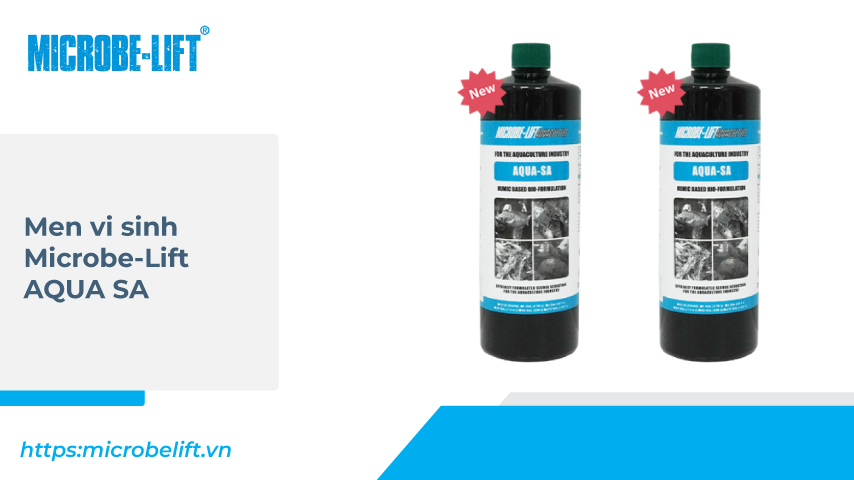
Next step, farmers proceed to decompose bottom sludge waste and toxic gases in the pond using Microbe-Lift AQUA SA probiotics . Using Microbe-Lift AQUA SA helps speed up the decomposition of organic matter and bottom sludge in the pond with beneficial microorganisms that function to treat waste and improve the health of whiteleg shrimp.
Advantages of Microbe-Lift AQUA SA probiotics:
- Accelerate the decomposition of bottom sludge, increase the rate of surface decomposition of hard scum and organic substances that are difficult to decompose. At the same time, quickly reduce toxic gases produced from bottom sludge.
- Rapidly decomposes difficult-to-decompose organic substances such as Benzene-, Toluene- or Xylene.
- Suitable for operation in salinity conditions up to 40 ‰ (about 4%).
- Save water change costs, reduce pond bottom dredging frequency.
- Inhibits the growth of harmful microorganisms living in the bottom mud environment. Decomposes and quickly reduces organic waste and pollution concentrations in pond water.
Reference: Handling suspended matter/clumps in shrimp ponds
Properly applying the methods of treating organic waste in shrimp ponds from the above article will help improve the quality of shrimp and fish in the pond and increase the productivity of the crop. Contact Biogency immediately via HOTLINE 0909 538 514 for advice and support in ordering Microbe-Lift products to effectively treat shrimp pond water. Wishing you a successful shrimp farming season!