

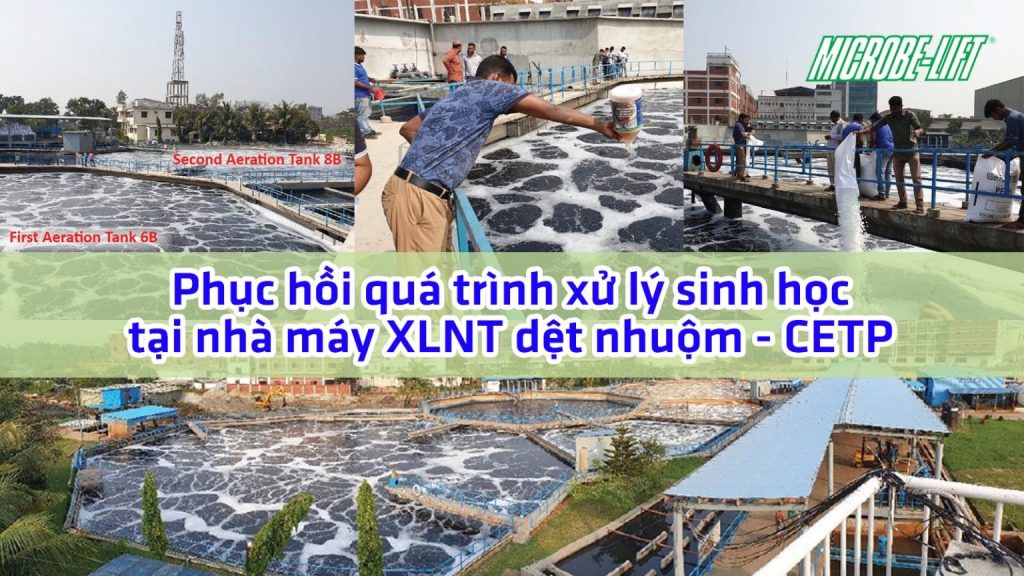
After a period of use, the textile wastewater treatment system at CETP factory encountered a problem: Biological processes did not take place due to the lack of MLSS in the aeration tank. The sludge recirculation (RAS) and sludge discharge (WAS) processes did not occur. Therefore, a solution to restore the biological treatment process at this factory is urgently needed.
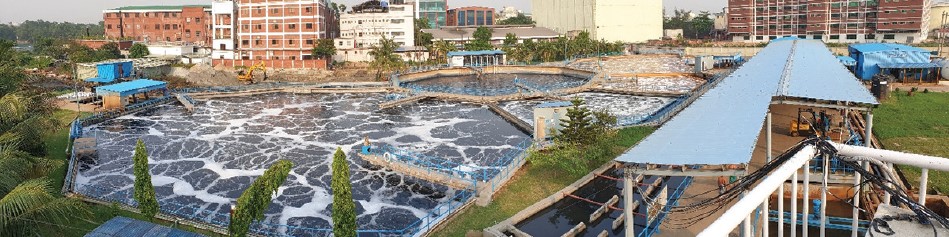
CETP is a textile wastewater treatment plant in Dhaka city with an average current flow rate of 24,000 m3/day. The system started operation in February 2012. The daily wastewater flow rate ranges from 22,000 m3/day to 27,000 m3/day. The system is expected to increase the inflow rate to 35,000 m3/day to meet future treatment needs.
The system includes a primary aerobic treatment process (retention time 10 hours) followed by 06 ECR (Electro Contaminant Removal – each unit processes 250 m3/h/65% COD) and 08 rectangular clarifiers to separate sludge using Poly Acrylamide Polymer. The wastewater after ECR is subjected to secondary aerobic treatment (retention time 12 hours) to increase DO for the final wastewater.
- Current status of CETP textile wastewater treatment plant
- Solution for restoring biological treatment process of CETP textile wastewater treatment plant using Microbe-Lift microorganisms
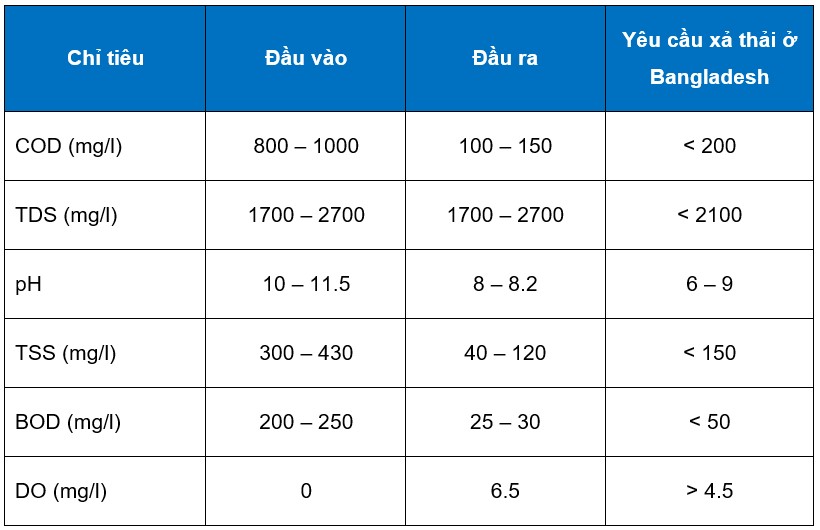
- Results of CETP textile wastewater treatment plant after using Microbe-Lift microorganisms
- Performance analysis after one month of using Microbe-Lift microorganisms at CETP textile wastewater treatment plant
Current status of CETP textile wastewater treatment plant
After a period of use, the textile wastewater treatment system at CETP factory encountered problems:
- Biological processes do not take place due to the absence of MLSS in the aeration tank.
- Sludge recirculation (RAS) and sludge discharge (WAS) do not occur.
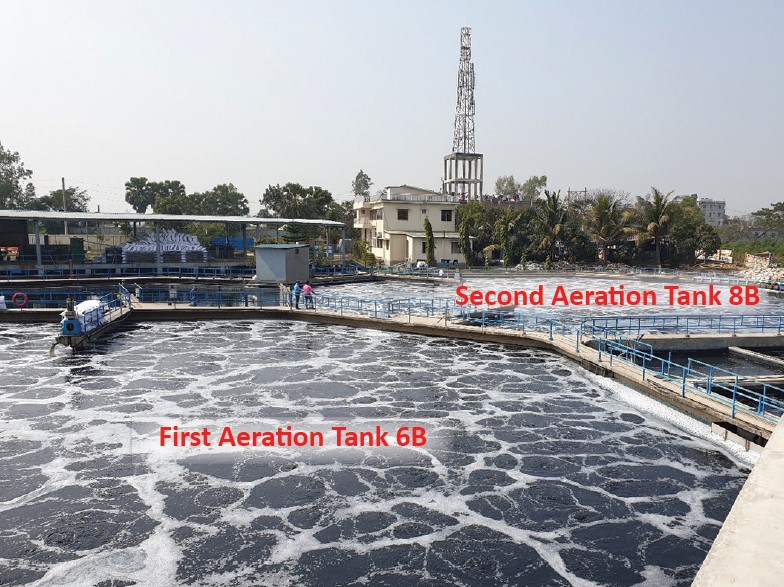
After testing the viability of Microbe-Lift microorganisms in reducing COD of CETP wastewater in March 2019 on a model with activated sludge recirculation capacity of 2000 liters, the results proved that Microbe-Lift microorganisms can reduce 50% of COD with a retention time of 10 hours. The management board of the textile wastewater treatment plant here decided to use Microbe-Lift microorganisms for the entire system.
>>> See more: Treatment of non-settling sludge in aerobic biological tanks in textile wastewater
Solution for restoring biological treatment process of CETP textile wastewater treatment plant using Microbe-Lift microorganisms
Step 1. Install a 9kW 250 m3/day submersible pump to circulate sludge to the aerobic tank. Maintain MLSS at around 2000 to 2500 mg/l.
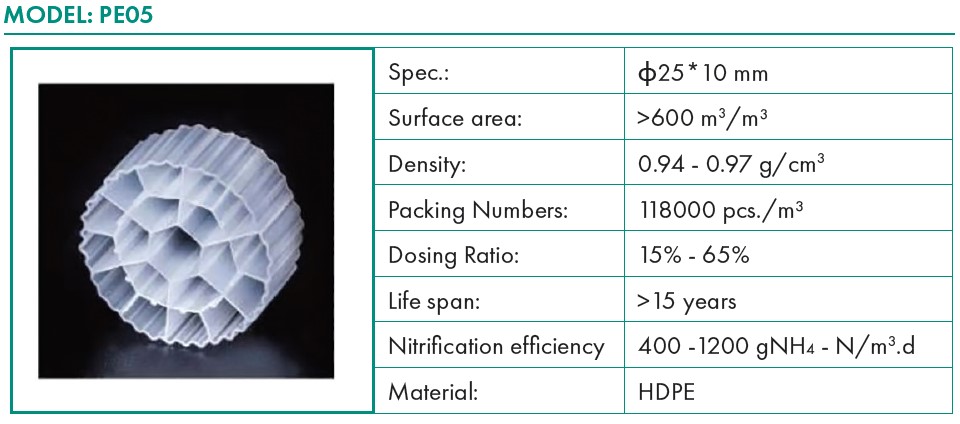
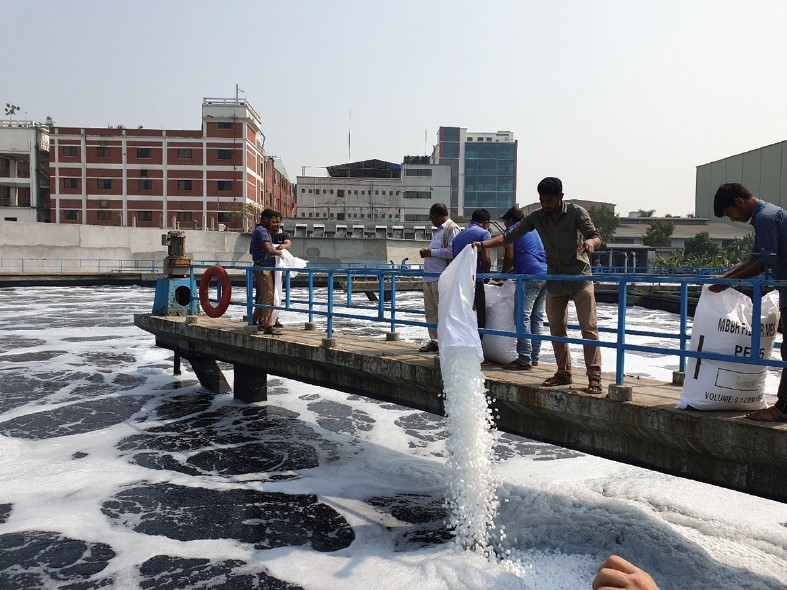
Step 2. Add 4500 cylindrical biological media to 02 aerobic tanks.
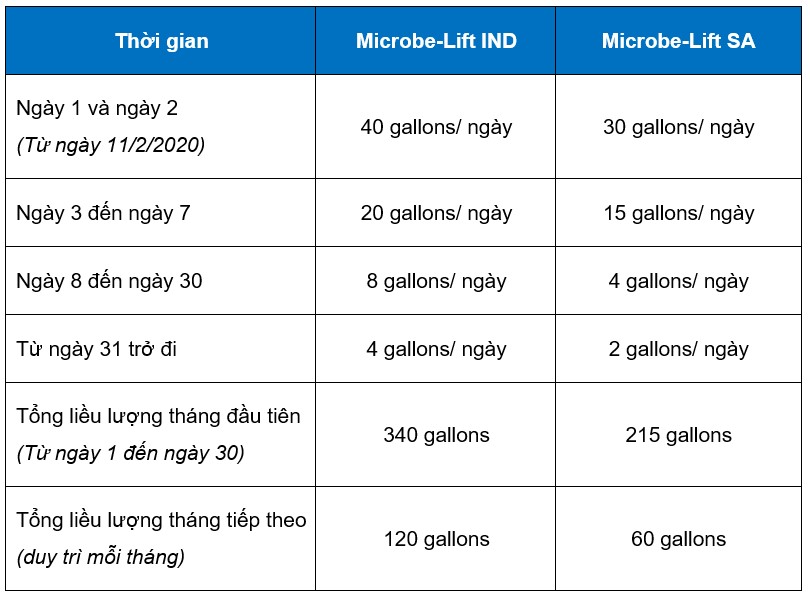
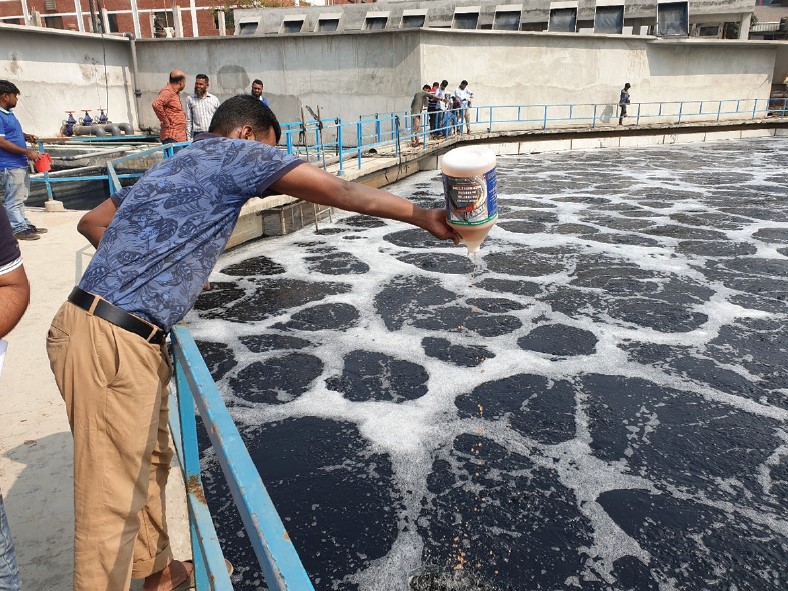
Step 3. Add Microbe-Lift microorganisms according to the following dosage:
Step 4. Reduce the influent wastewater flow by 50% for 5 days after adding Microbe-Lift to increase the retention time in the aerobic tank. The COD is expected to decrease from 900 mg/l to about 350 mg/l. This will reduce the ECR load by more than 60%.
Step 5. Regularly monitor the following indicators closely for the biological process to take place effectively:
- Maintain pH at 7 to 8.
- Maintain DO not less than 1.5 mg/l.
- Regularly check the C:N:P ratio to ensure there is a nutritional balance for bioremediation. Have DAP and Urea available to supplement nutrients at any time if needed.
- Adjust and monitor RAS and WAS to maintain desired MLSS in aerobic tanks.
Results of CETP textile wastewater treatment plant after using Microbe-Lift microorganisms
After 1 month of using Microbe-Lift microorganisms, the biological treatment system recovery process of CETP textile wastewater treatment plant has brought positive results. Specifically:
- The primary aerobic treatment process reduced COD from 1000 mg/l to about 300 mg/l. Compared to before using Microbe-Lift microorganisms, COD from 1000 mg/l only reduced to 700 mg/l.
- COD reduction prior to ECR treatment reduces ECR power and steel plate consumption by 60%.
- The amount of sludge after ECR is reduced by half. This leads to a reduction in PAC and sludge treatment costs. Although not much, it makes the operating technicians happy because they do not have to spend time and effort to treat sludge.
- Due to low BOD load, MLSS in the aerobic tank is maintained at only 400 mg/l.
- The biological media works well, helping to retain microorganisms in the aeration tank.
See more:
>>> Microbe-Lift IND microorganisms for treating BOD, COD, TSS
>>> Microbe-Lift SA microorganisms for reducing sludge
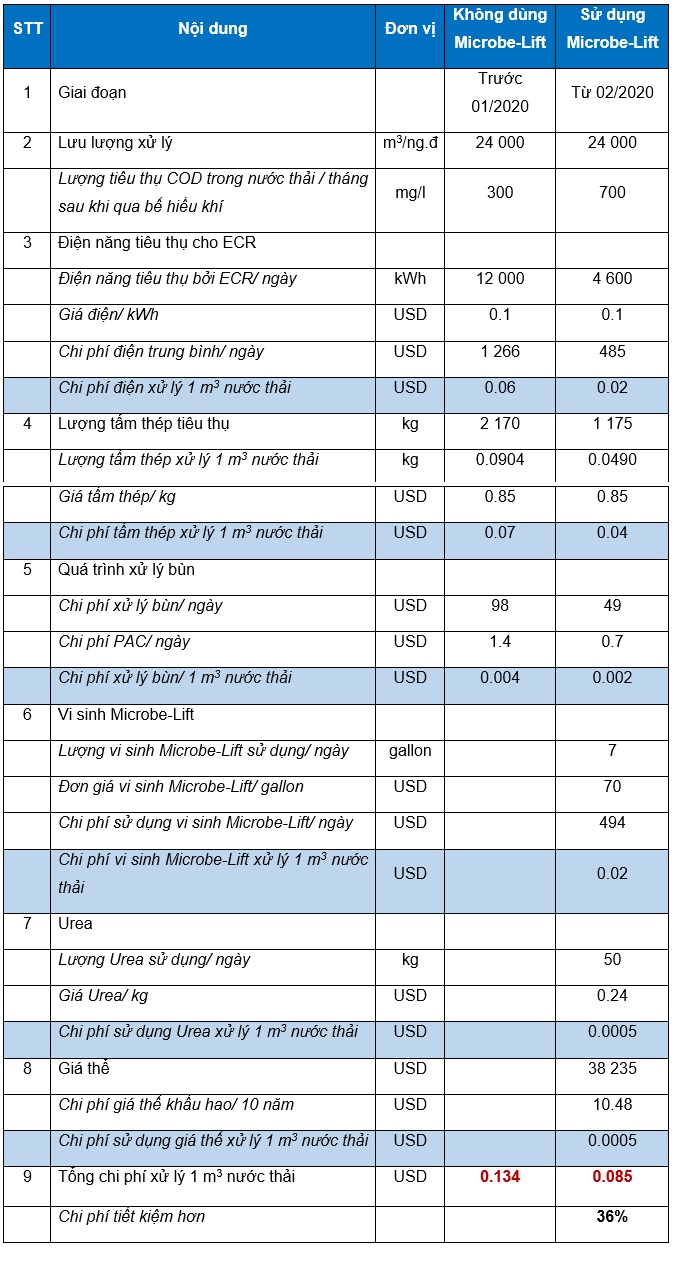
Performance analysis after one month of using Microbe-Lift microorganisms at CETP textile wastewater treatment plant
Summary of cost benefits before and after using Microbe-Lift microorganisms at CETP plant in Bangladesh:
Contact hotline 0909 538 514 for advice on textile wastewater treatment solutions and to order Microbe-Lift microorganisms today!