

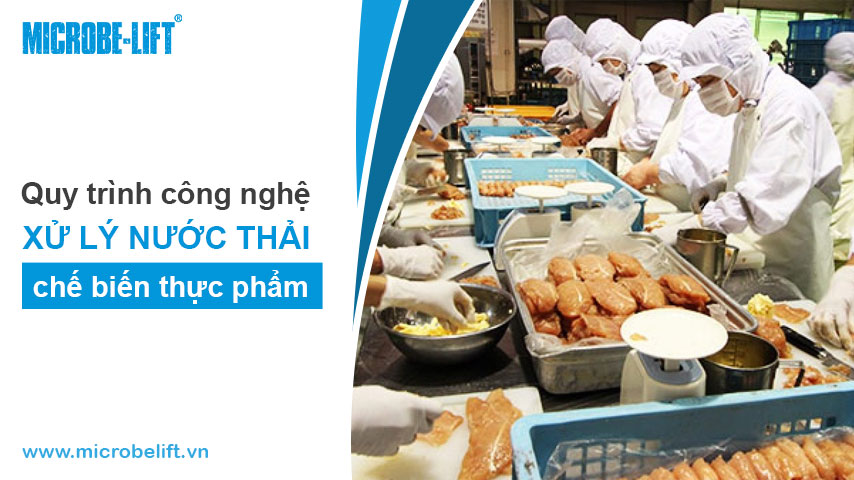
With high levels of pollutants, food processing wastewater treatment is a necessary requirement that every business operating in the food processing industry must comply with. However, what technology is applied to effectively treat food processing wastewater?
- Current status of food processing industry in Vietnam and wastewater treatment needs
- Composition and properties of food processing wastewater
- Technological process of food processing wastewater treatment
- Food Processing Wastewater Treatment Project at San Miguel Pure Foods
Current status of food processing industry in Vietnam and wastewater treatment needs
The food processing industry in Vietnam is on the rise. The evidence is that the industry’s production value accounts for 19.1% – the highest in the processing and manufacturing industry group (according to data from the Ministry of Industry and Trade).
In addition, after the Free Trade Agreements that Vietnam signed came into effect, the food production and processing industry also had a wider market to develop. Although the number of food processing enterprises is not large (only about 1% of the total number of enterprises nationwide), this is one of the key industries with high development potential. According to statistics, the food processing industry accounts for more than 20% of the net production and business revenue in the processing and manufacturing industry group every year (information on dangcongsan.vn).
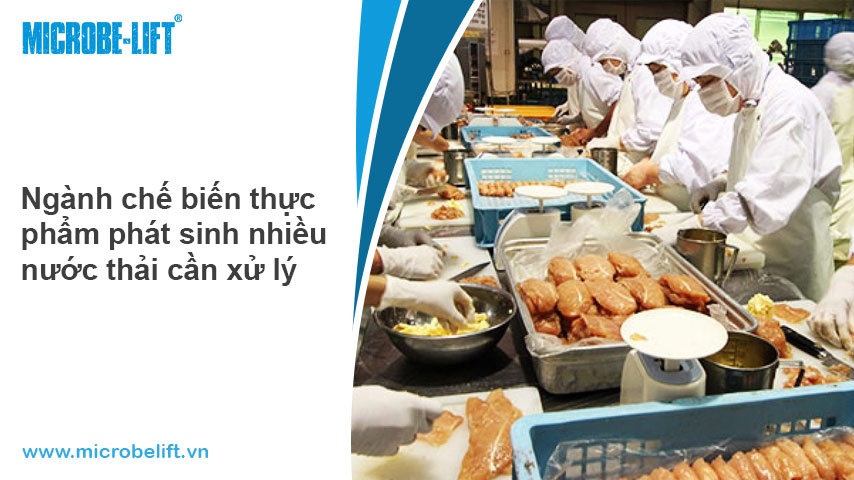
The strong development of the food processing industry has created more wastewater that needs to be treated. This has unintentionally put pressure on some businesses operating in the industry as the State increasingly tightens regulations on the treatment of food processing wastewater, but businesses cannot meet the wastewater treatment system and the quality of the output wastewater. The reason for this is that the production volume has increased too quickly while the wastewater treatment system has not been expanded to handle the corresponding amount of pollution.
Regulations on discharge limits of food processing wastewater are generally stipulated by the state in QCVN 40:2011/BTNMT – National technical regulation on industrial wastewater. Particularly for seafood processing wastewater, it is stipulated separately in QCVN 11-MT:2015/BTNMT – National technical regulation on seafood processing wastewater.
Composition and properties of food processing wastewater
Food processing wastewater is characterized by nitrogen, BOD, COD, TSS, phosphorus and pathogenic microorganisms contents many times higher than the discharge standards. The table below is a typical example:
| STT | Parameter | Unit | Input value | QCVN 40:2011/BTNMT | |
| Column A | Column B | ||||
| 1 | pH | – | 6 – 9 | 5.5 – 9 | |
| 2 | BOD5 | mg/l | 700 – 1500 | 30 | 50 |
| 3 | COD | mg/l | 1000 – 2500 | 75 | 150 |
| 4 | TSS | mg/l | 350 – 700 | 50 | 100 |
| 5 | Total Nitrogen | mg/l | 100 – 250 | 20 | 40 |
| 6 | Total Phosphorus | mg/l | 10 – 50 | 4 | 6 |
| 7 | Grease | 50 – 200 | 5 | 10 | |
| 8 | Total Coliform | MPN/100ml | 10^4 – 10^5 | 3,000 | 5,000 |
If pollutants are not treated, they will cause serious consequences for the environment: polluting the receiving water source, poisoning aquatic animals and plants, disrupting the ecological balance of the water environment, causing unpleasant odors and causing diseases for humans…
Technological process of food processing wastewater treatment
With such high levels of pollutants, food processing wastewater treatment is a necessary requirement that every business operating in the food processing industry must comply with. However, what technology is applied to effectively treat food processing wastewater?
Nowadays, most businesses prioritize the application of biotechnology to treat food processing wastewater. The advantages of biotechnology are:
- Easy to operate.
- Suitable for treating organic pollutants in food processing wastewater, especially BOD, COD, TSS, Nitrogen, Phosphorus…
- Cost savings for businesses compared to chemical treatment technology.
- Safe for operators.
Below is a typical food processing wastewater treatment technology process that is currently being applied by many businesses:
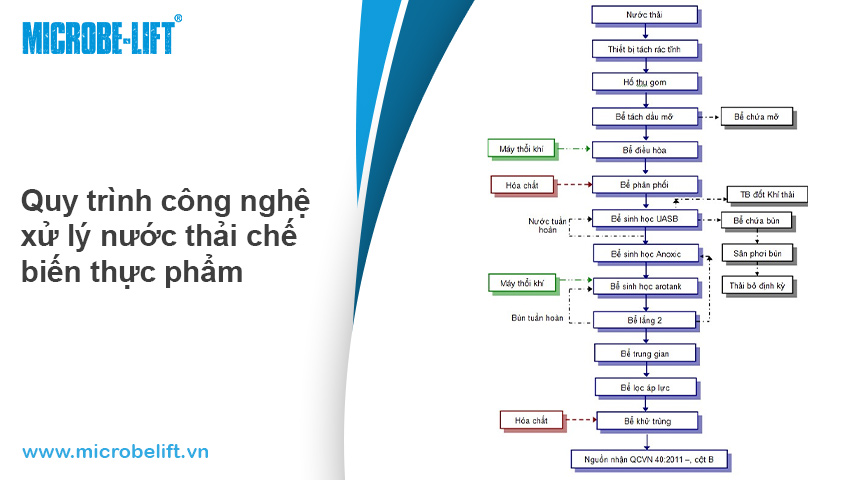
This is AAO wastewater treatment technology, based on 3 anaerobic (UASB), anoxic (Anoxic) and aerobic (Aerotank) tanks to treat pollutants.
- The anaerobic tank plays a role in treating BOD, COD, TSS at high concentrations to reduce the pollution load for the anaerobic and aerobic tanks behind.
- The anaerobic tank plays a role in promoting the Nitrification process to convert Ammonia Nitrogen into Nitrate form.
- Aerobic tank plays a role in treating BOD, COD, TSS and Nitrate to bring pollution indicators to meet discharge standards.
Food Processing Wastewater Treatment Project at San Miguel Pure Foods
San Miguel Pure Foods food processing plant in Binh Duong also applies AAO technology to treat wastewater. The problem that the wastewater treatment system here is facing is that during the expansion of production and processing, the amount of wastewater has increased, causing the output wastewater to not meet the two criteria of Ammonia Nitrogen and Total Nitrogen compared to Column A – QCVN 40:2011/BTNMT. Therefore, the management board of the San Miguel Pure Foods wastewater treatment system contacted Biogency to fix the above problem.
Biogency’s solution is to adjust the conditions of the aerobic tank and use Microbe-Lift N1 to promote the Nitrification process in this tank, the goal is to reduce the Ammonia Nitrogen index and then reduce the total Nitrogen index.
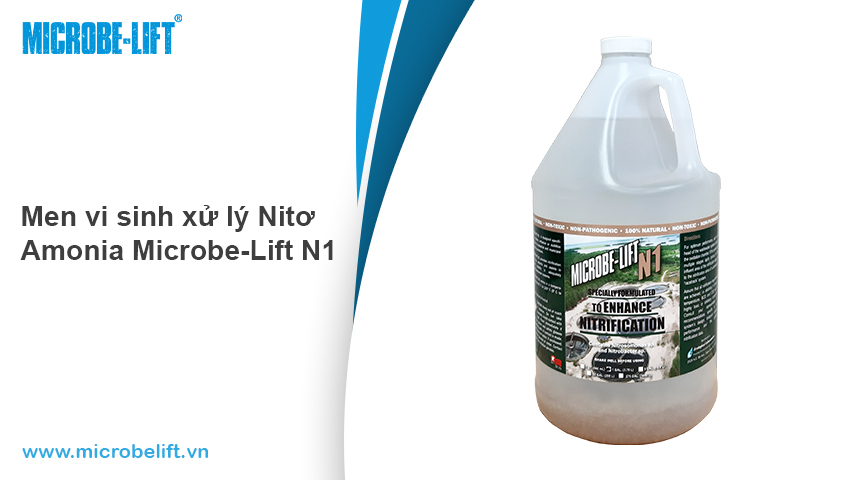
The uses of Microbe-Lift N1 are: Promoting the fast and strong nitrification process thanks to containing 2 specialized microorganisms, Nitrosomonas and Nitrobacter. In which:
- Nitrosomonas: Converts Ammonium Nitrogen (N – NH4+) into Nitrite (NO2-).
- Nitrobacter: Converts Nitrite (NO2-) to Nitrate (NO3-).
Dosage for San Miguel Pure Foods food processing wastewater treatment system is: 10 gallons of Microbe-Lift N1.
The results achieved are as follows:
- Ammonia Nitrogen after treatment reaches 0.3 mg/l – 10 times lower than Column A – QCVN 40:2011/BTNMT.
- Total Nitrogen after treatment reaches 12 mg/l – equal to Column A – QCVN 40:2011/BTNMT.
Reference: Oil treatment in food processing wastewater
If your food processing wastewater treatment system is also experiencing similar problems, please contact Biogency immediately via Hotline 0909 538 514 for the fastest support!