

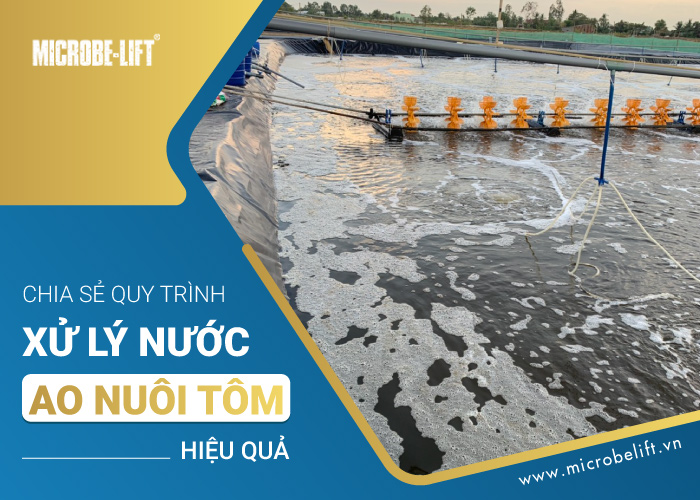
Pond water treatment is a very important job in the aquaculture process. This requires farmers to have full technical knowledge and practical experience to be able to treat pond water properly. There are many techniques and methods to solve this problem, this article Biogency will analyze and share specific solutions to support farmers in treating pond water from the time of renovation until the end of the season.
- Prepare shrimp pond water
- Pond treatment during shrimp farming
- Post-harvest pond bottom treatment
Prepare shrimp pond water
Settling pond treatment
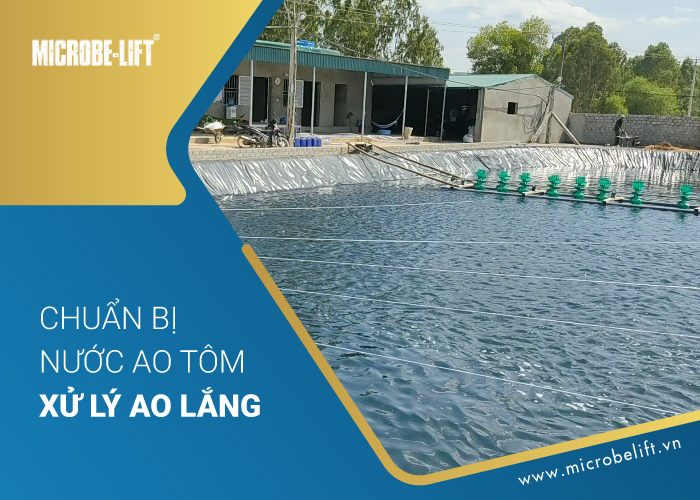
Source water is transported through a filter to limit trash and prevent natural organisms from entering. The settling process will last from 3 to 5 days, during which time organic substances have enough time to decompose nutritional salts for algae growth, while helping to reduce the density of pathogenic bacteria.
It is necessary if possible to run a water fan to provide additional dissolved oxygen to promote the decomposition of organic matter, so the longer the settling time, the higher the efficiency.
Transfer water from settling pond to rearing pond
The process of pumping water through the pond should use filter bags or kate cloth to eliminate pests, intermediate hosts causing diseases or competing microorganisms, etc. The ideal pond water level is from 1.3 m – 1.4 m high, creating enough space for shrimp to move and stabilize the living environment.
Eliminate impurities
During the first 3 days, run the fan continuously to let the crustaceans and fish eggs hatch, then add rotenone (tobacco root); saponin; or maybe some chemicals in moderate doses.
The most effective time to use tea grounds powder is from 4am to 6am. If the salinity of the shrimp pond is lower than 10 ppt or there are many hatched fish and crustaceans in the pond, the dosage of tea grounds powder should be increased.
In case of snails and bottom algae appearing in the pond, copper sulfate (CuSO4) can be used with a dosage of 2kg – 3kg / 1000 m3 of water.
Reference: How to kill miscellaneous fish in shrimp ponds
Sterilization
After about 2 days of eliminating the weeds, we proceed to disinfect to eliminate pathogens in the pond. Farmers can use disinfectants such as TCCA, Chlorine, BKC, Iodine, PVP-Idodine, potassium permanganate KMnO4, etc. to effectively treat bacteria.
Chlorine is the most commonly used by farmers today, with pH <7.5, the dosage of chlorine needed for treatment is about 25 – 30ppm, can increase or decrease depending on the organic content and pH of the water.
When using potassium permanganate and Formalin, which are unstable, they can have negative effects on the health of users. In farming areas where acute hepatopancreatic necrosis disease ( EMS disease in shrimp ) appears, BKC should be used at a dose of 0.3ppm.
Reference: Notes when using disinfectants in shrimp ponds
Supplementing microorganisms
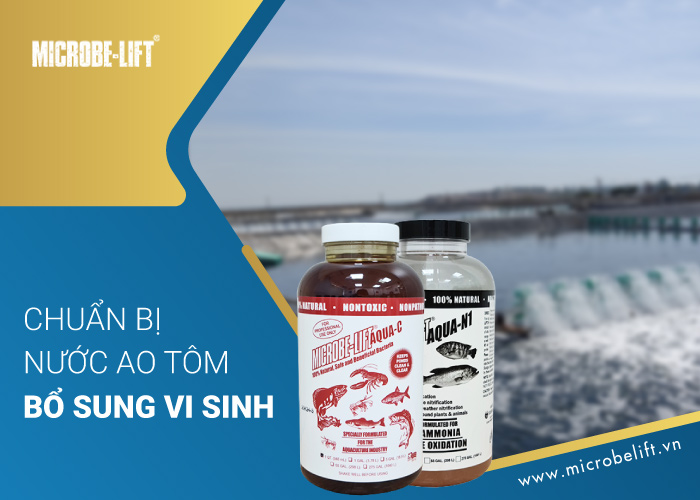
Use microorganisms after disinfection to create a healthy microflora for shrimp and water. The disinfection process can destroy beneficial bacteria. The commonly used microorganisms are Microbe-Lift . Microorganisms will help balance the water environment, decompose bottom sludge and organic waste later. Some microorganisms also help increase shrimp resistance.
+ Using Microbe-Lift AQUA C probiotics creates a clean ecosystem for the pond, limits pathogenic microorganisms and prevents the appearance of toxic gases. The dose should be 1 liter for about 2,000 – 10,000 m3 of pond volume.
+ Microbe-Lift AQUA N1 is a liquid microbial product used to prevent and treat toxic gases in aquaculture ponds and lakes. Reduces the concentration of toxic gases NH3, NO2, H2S in aquaculture ponds.
Coloring
The nature of coloring is to stimulate the growth of beneficial algae in shrimp ponds at the required density. With different environmental conditions, there will be different methods of coloring shrimp ponds. First, to standardize the environment, users should add nutrients to develop algae such as molasses or dolomite.
Refer to how to color shrimp pond water
Pond treatment during shrimp farming
Treatment of cloudy water in shrimp ponds
Causes of cloudy shrimp pond water
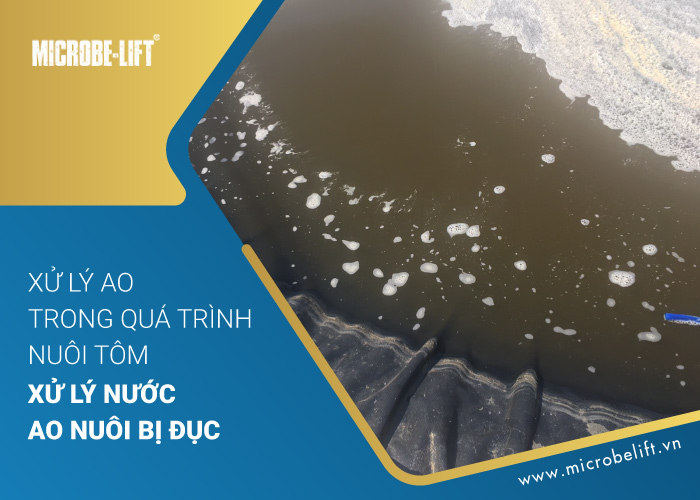
- Natural factors:
Often due to prolonged rains that wash away soil around the banks to the bottom of the pond, causing turbidity. It could be that the clay colloids suspended in the pond are difficult to settle. Many times it is due to excessive growth of shrimp waste and organisms in the pond, leading to turbidity in the pond. In addition, excessive algae growth, causing algae to die, is also the cause of turbidity in the pond.
- Human factor:
+ During the pond renovation process, people did not dredge thoroughly or did not clean the pond bottom properly.
+ The pond is too shallow and the water fan is running too strong, which is a common cause of cloudy pond water.
+ In addition, people may use poor quality lime containing many impurities in the pond before raising.
+ In the farming process, giving too much industrial feed in the long run will also make the pond cloudy.
Methods to deal with cloudy ponds
- How to prevent
– The process of dredging and compacting the pond must be done carefully before supplying water to the pond.
– Cover the pond bank with tarpaulin to prevent the soil from being washed away by rainwater.
– The water supply process should choose a clear water source that has settled for 15 days, and at the same time use a filter to remove suspended particles before putting water into the pond.
– Choose quality lime and apply lime in the right dosage.
- How to handle cloudy ponds
Turbid ponds reduce dissolved oxygen levels, negatively affecting the growth of algae, which in turn affects the shrimp’s respiratory system, causing slow growth. Therefore, it is necessary to handle the situation quickly if the pond appears cloudy, but depending on the cause, we have different solutions:
+ In case the pond is cloudy due to natural factors, it is usually due to dissolved mud and too many suspended particles, so farmers should change the pond water immediately or use coagulants.
+ In case the pond is cloudy due to algae die-off, farmers should apply hot lime with a reasonable dosage to cut the algae die-off at night, then use the biological product Microbe-Lift AQUA C to balance the pond ecosystem.
+ If the pond is cloudy due to too much excess food, you should change the water and combine it with AQUA C probiotics for optimal treatment results.
Reference: How to effectively filter water in shrimp ponds
Treatment of polluted pond bottom
Causes of bottom mud
Bottom sludge is mainly formed from excess food, dead bodies and waste of shrimp. After a period of uncontrolled time, organic substances will accumulate and settle to form a layer of smelly bottom sludge, affecting humans and the pond ecosystem.
In addition, bottom sludge is also caused by the following factors:
+ The shore is eroded by water
+ Effects of lime and minerals added to the pond
+ Suspended particles follow the water supply line into the pond
Bottom sludge treatment method
Below are some methods of treating sludge at the bottom of shrimp ponds , you can refer to:
- Clean the pond
Dry or wet renovation methods can be used depending on the pond environment conditions. (Biogency will discuss dry or wet renovation methods in the following section).
- Restricting the flow of water causes erosion
Overcome erosion by building a solid pond system and washing the pond several times. This will help keep the pond clean and prevent pathogens for farmed shrimp.
- Food intake management
Choose high quality feed and use it in the right amount to avoid excess feed in the pond. Poor quality feed will cause a high feed conversion ratio, making it difficult for shrimp to consume the feed, thereby increasing the amount of sludge at the bottom of the pond.
- Remove waste from the pond
Some methods of removing waste from ponds include direct bottom water replacement using a central drainage system or a sludge pump.
Microbe-Lift AQUA SA liquid sludge treatment probiotics contain a diverse, highly active microbial population, specifically designed to accelerate the decomposition of difficult-to-decompose organic matter, thereby significantly reducing the amount of sludge at the bottom of aquaculture ponds.
Treatment of shrimp pond water with white foam that takes a long time to dissolve
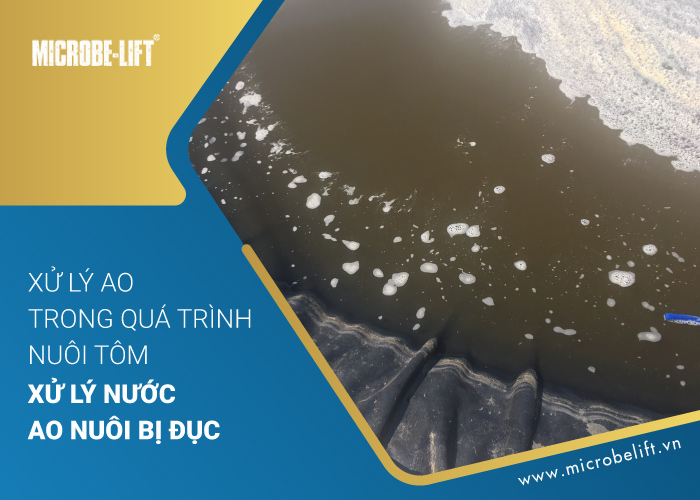
Causes of white foam in ponds
– The phenomenon of white foam forming is due to the amount of toxic H2S gas rising up to create bubbles that take a long time to dissolve, causing a lack of dissolved oxygen in the pond. H2S is often formed from waste that has accumulated for too long at the bottom of the pond, making it difficult for shrimp to breathe and susceptible to poisoning. (refer to how to treat toxic H2S gas )
– Algae die-off is also the cause of white foam appearing in shrimp ponds. This is a factor that causes water quality to deteriorate, creating white foam that takes a long time to dissolve even when running a water fan. (Refer to how to handle algae die-off )
Prevention
+ Ensure environmental factors, manage algae by regularly removing dead algae.
+ Do not let food accumulate for too long, reduce food by about 50% for a period of time until the water environment is stable.
+ Regular use of biological products to balance pond water is essential to help keep pond water clean, water color stable, and reduce diseases that are harmful to shrimp.
+ If you see that the shrimp are weak, add minerals and vitamins to the food to help the shrimp get healthy again.
+ Maintain the aeration process regularly to provide oxygen for the algae decomposition process.
How to fix
+ If you find that the pond has too much white foam that takes a long time to dissolve, specifically toxic gases H2S, NH3, you should treat it by using Microbe-Lift AQUA N1 to treat toxic gases with a dosage of about 500ml/5000m3 of water. AQUA N1 has the ability to effectively reduce the concentration of toxic gases of NH3, NO2, H2S in the pond and adjust the dosage according to the concentration of toxic gases in the pond. More specifically, you can call the Hotline : 0909.538.514 for more detailed advice.
+ Directly reduce 50% of food intake compared to normal days to support the process of treating toxic gases.
+ If there is a lot of scum on the water surface due to dead algae, you should scoop it up and combine it with the use of Microbe-Lift AQUA SA, Aqua C bottom treatment probiotics to clean the pond environment. In addition, increase the fan operation to provide oxygen for the shrimp. Monitor the alkalinity and pH in the pond to adjust accordingly. If the pH is low, add an appropriate amount of lime to the area where shrimp waste accumulates to bring the pH back to a balanced level, above 7.5.
Post-harvest pond bottom treatment
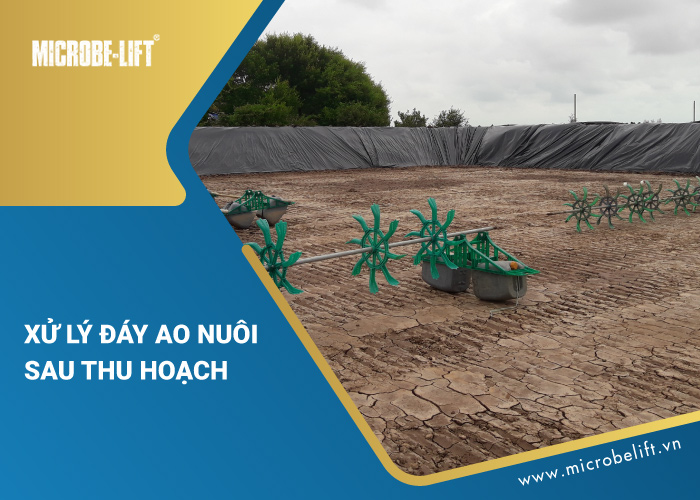
There are 2 methods of pond bottom treatment: dry renovation and wet renovation (depending on the pond conditions, people choose the appropriate renovation method).
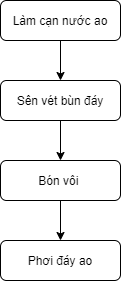
The renovation process is as follows:
Dry renovation method
This method is often applied to ponds that can be drained, the renovation is as follows:
+ After harvesting shrimp, farmers should drain all the old pond water and dredge all the mud with a vacuum cleaner or manually to remove all organic sediment from the pond.
+ Apply lime to the bottom (500-1000kg/1ha) and till evenly (Need to check the pH of the soil at the bottom of the pond to apply lime appropriately)
+ Dry for about 10 to 15 days then filter the water into the pond.
Wet renovation method
This method is applied to ponds that do not have the conditions to drain the water to dry the bottom. The renovation method is as follows:
+ Drain the pond as much as possible
+ Use a pressure water pump to aerate the bottom of the pond and clean all waste.
+ Sludge wastewater is pumped to the settling pond for treatment.
+ Apply quicklime CaO evenly over the bottom and banks of the pond, with the amount of lime depending on the pH of the pond water. Normally, farmers should apply a dosage of 1200 to 1500 kg/ha for ponds with a water level of 10cm, and for ponds with a depth of 0.5 to 1m, use twice as much lime.
Reference: How to color shrimp pond water
________________________________________
Above is all about the shrimp pond water treatment process that we want to share with you, hoping that you will be able to apply the above techniques and practical knowledge to your shrimp farming process. Wish you success! For more detailed advice on shrimp pond water treatment techniques using biological methods, please contact us immediately via HOTLINE: 0909 538 514