

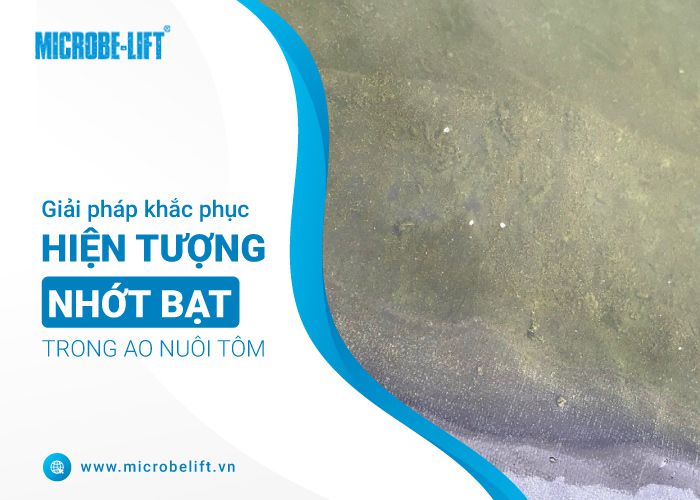
Where does the phenomenon of slime come from? What is the effective solution? In this article, let’s find out the answer with Biogency!
- Causes of slime in shrimp ponds
- The impact of tarpaulin slime on the pond
- Solution to handle the phenomenon of slime in shrimp ponds
Causes of slime in shrimp ponds
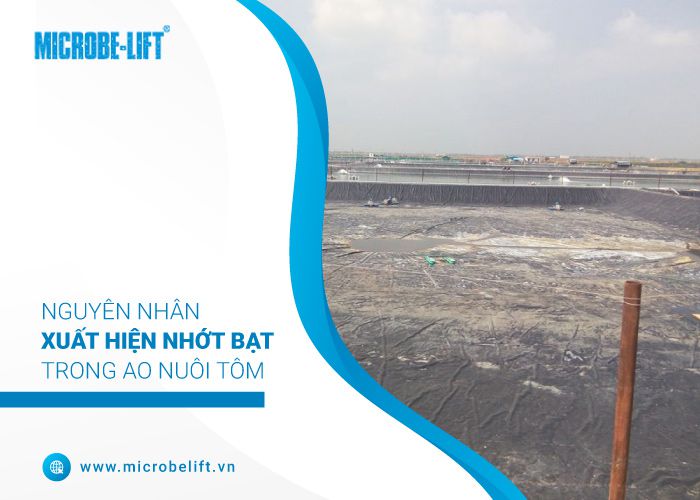
The phenomenon of slimy shrimp ponds often appears in ponds with bad environmental conditions, too much excess organic matter and the use of poor quality probiotics of unknown origin.
Filamentous bacteria (such as Microthrix parvicella, Nocardioform) develop dense mucus fibers that can stick to the shrimp’s gills, making it difficult for the shrimp to breathe and kill them. For small shrimp, they will get stuck, leading to death and loss of productivity.
After a period of raising, the pond canvas is very susceptible to slime, dead algae , coin mold , slime from molting shrimp, etc., causing slimy water. When shrimp come into contact, they are susceptible to intestinal diseases and bacteria in the pond develop rapidly.
In ponds with water that is too clear, when light penetrates to the bottom, it causes metal and alum to precipitate, creating conditions for slime to appear densely on the canvas.
The impact of tarpaulin slime on the pond
The long-term presence of slime in the pond will greatly affect the water quality of the pond, leading to fluctuations in hydro-physical-chemical factors, making shrimp susceptible to diseases such as black gills, body spots, yellow gills, etc., hindering the development and growth of farmed shrimp.
The slime clinging to the canvas is the habitat of many dangerous pathogens such as bacteria, parasites , viruses, etc. Too thick slime will compete for nutrients with beneficial algae groups in the pond. Because of its algae-like nature, when slime dies, the algae will die.
If shrimp accidentally eat food containing slime, it will affect the intestines, creating conditions for bacteria to attack, causing white feces disease . In addition, the shrimp’s hepatopancreas will have to work at a higher capacity, which will be easily damaged, disrupting the shrimp’s health. Because of its algae-like nature, when dead, the remains of slime can also decompose into some dangerous toxic gases.
Tarpaulin slime is a habitat for harmful bacteria and fungi, and when eaten by shrimp, it can easily cause intestinal diseases.
When the slime is formed, it will deposit excess food, dead algae or dead shrimp. This contributes to the formation of anaerobic conditions that produce toxic gases in the pond and harm the shrimp.
Algae growth on tarpaulins can also disrupt the balance of pond water as algae growth depletes oxygen.
In addition, tarpaulin oil also causes difficulties for farmers because it increases the cost of processing and cleaning tarpaulins.
Solution to handle the phenomenon of slime in shrimp ponds
+ Use the tarpaulin scrubbing method to reduce the viscosity of the tarpaulin. The disadvantage of the manual tarpaulin scrubbing method is high labor intensity and low processing efficiency.
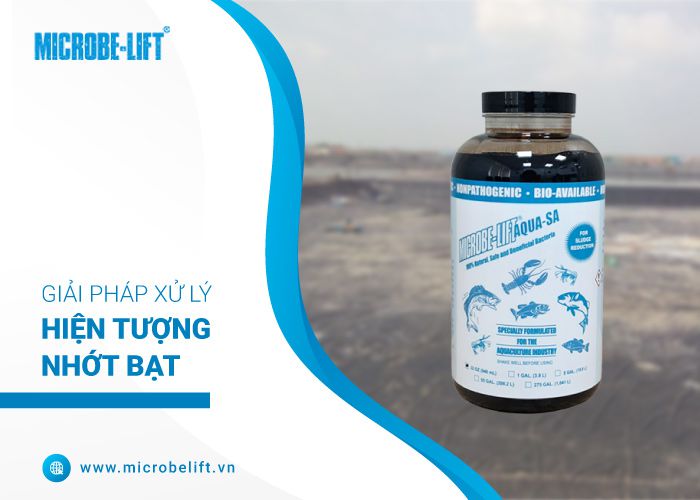
+ Applying probiotics in treating tarpaulin houses will bring higher efficiency due to fast processing speed and safety for the environment. Microbe-Lift AQUA SA probiotics for cleaning pond water is a product containing 4 strains of microorganisms: Bacillus amyloliquefaciens, Bacillus subtilis, Bacillus licheniformis, Bacillus megaterium
| Species | Uses | Mechanism |
| Bacillus amyloliquifaciens | Has antibacterial and antifungal activity and may prevent infection through competitive exclusion | With a complex mechanism it also naturally synthesizes the antibiotic protein barnase to inhibit harmful bacteria. |
| Bacillus licheniformis | Clean the bottom mud and canvas slime | Is a gram-positive, thermophilic bacterium.The ability to secrete alkaline serine protease has made B. licheniformis one of the most important bacteria in industrial enzyme production. B. licheniformis secretes highly detergent enzymes so it has the ability to clean bottom mud or tarpaulin slime. |
| Bacillus megaterium | Cleans bottom mud, creates natural antibiotics, kills fungi and viruses | B. megaterium produces penicillin amidase, an enzyme that is considered a natural antibiotic. It also produces enzymes to regulate corticosteroids, as well as some amino acid dehydrogenases. Furthermore, it produces pyruvate, vitamin B12, and molecules with antifungal and antiviral properties. |
| Bacillus subtilis | Aids digestion, produces enzymes that prevent harmful bacteria | B. subtilis was found to act as a fungicide inhibiting the growth of the fungus Monilinia vaccinenii-corymbosi.Create enzymes to aid digestion |
| Humic, humate | Add organic ingredients to the pond environment to help the bacteria grow better. |
+ To limit the harmful effects of shrimp pond tarpaulin, the pond water level and clarity must always be stable, not allowing light to penetrate to the bottom. Before stocking, the pond water should be colored, at the same time creating a natural food source, supplementing the amino acids necessary for the shrimp growth process.
+ Balance the amount of food for shrimp, limit excess food to cut off additional nutrients, limit the thick slime development in the pond. At the same time, the environment needs to be treated regularly to ensure the shrimp are healthy enough to withstand the effects of slime.
____________________________
The phenomenon of slime in aquaculture ponds poses many potential dangers to the pond. If you do not find the optimal solution to this situation, it will cause great consequences to shrimp productivity. With the above sharing, we hope that you have equipped yourself with the appropriate knowledge to be able to handle the above situation effectively. Contact Biogency immediately via HOTLINE: 0909 538 514 for more detailed advice.