
The wastewater treatment system here is operating quite well. COD and other indicators all meet output standards. However, the Ammonia indicator is always unstable. There are times when it reaches more than 30 mg/l while the output standard must meet column A QCVN 14:2008. Therefore, the system needs a solution to treat Ammonia to meet output standards .
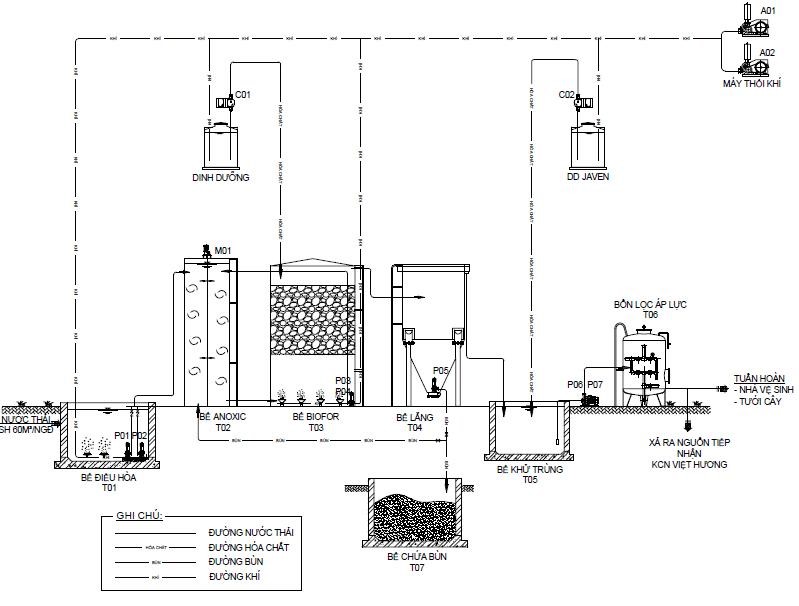
The system is built with a capacity of about 60 m3/day and night. This is a system of a company specializing in manufacturing and supplying products such as: Rubber shoe soles, EVA soles, yoga mats, EVA flip flops, EVA molded slippers, foam floor mats, etc. The factory is located in Viet Huong Industrial Park, Binh Duong Province.
- Current status of wastewater treatment of the factory
- Microbe-Lift’s Standard Ammonia Treatment Solution for Factories
Current status of wastewater treatment of the factory
The wastewater treatment system here is operating quite well. COD and other indicators all meet the output standards. However, the Ammonia indicator is always unstable. So how to treat Ammonia to meet the standards?
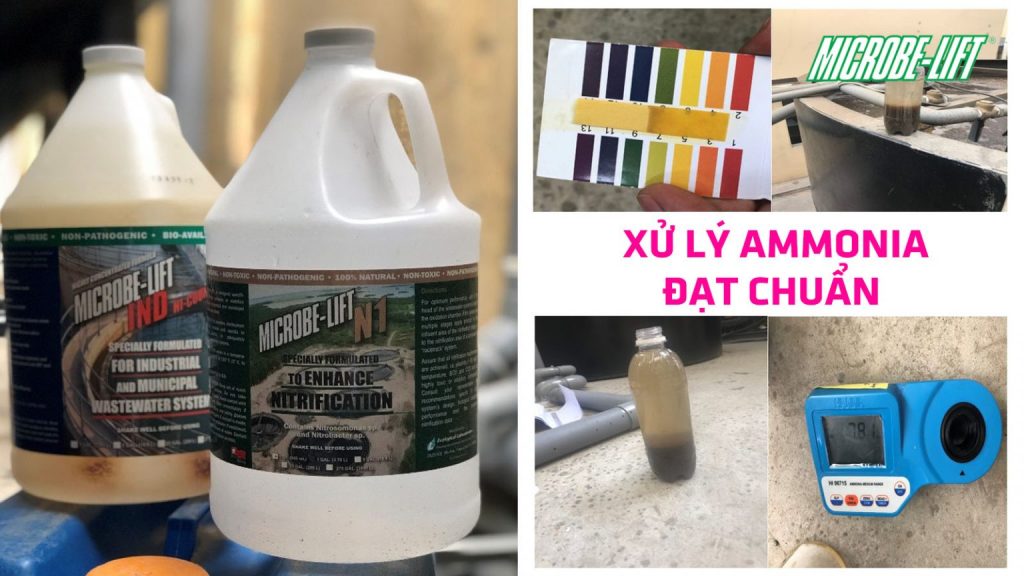
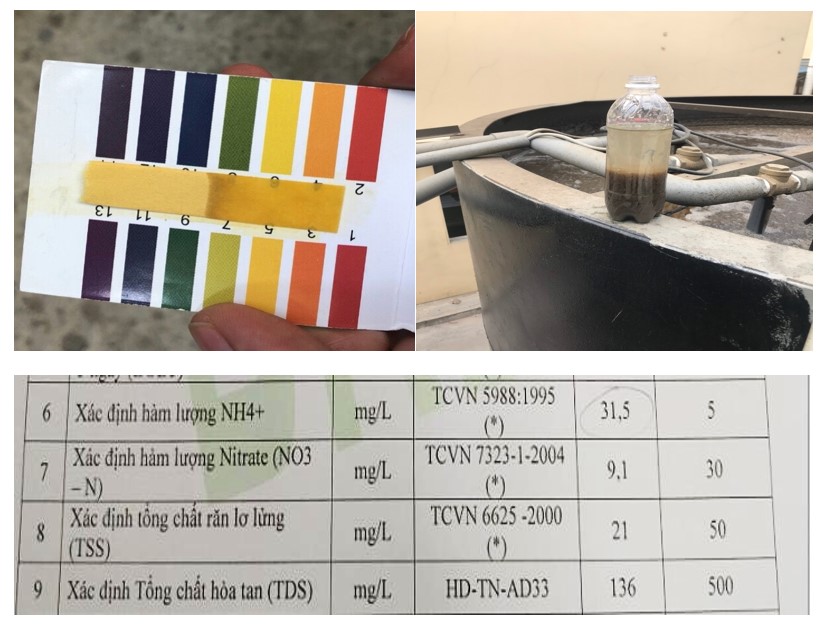
There was a time when it reached more than 30 mg/l while the output standard must meet column A QCVN 14:2008. In addition, at the time the Microbe-Lift technician came down to survey, the sludge in the aerobic tank was a bit fine, with a lot of suspension. The pH in the aerobic tank was low, and the alkalinity was almost non-existent. Before that, the water sample was tested (taken at the system outlet), and the output ammonia content did not meet the standard. Exceeded more than 6 times with the following specific results:
Microbe-Lift’s Standard Ammonia Treatment Solution for Factories
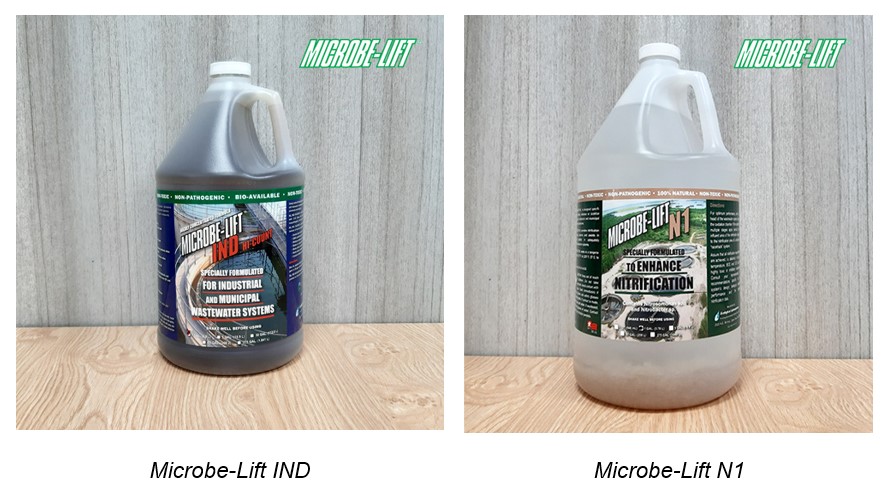
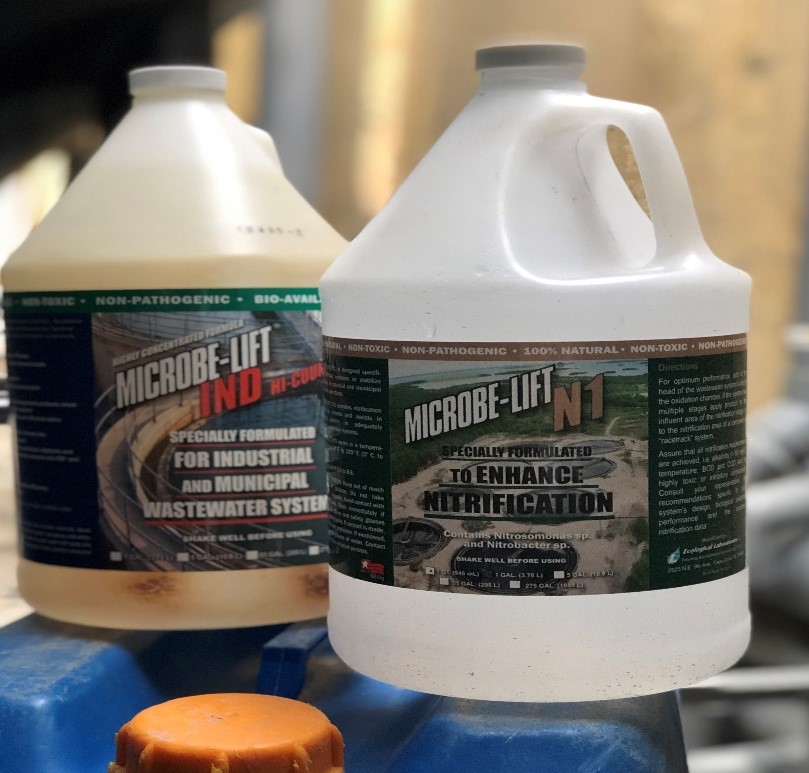
From the above situation, Microbe-Lift advised adding 2 bottles of Microbe-Lift IND and 2 bottles of Microbe-Lift N1 to the Anoxic tank and Biofor tank.
- Microbe-Lift N1 contains Nitrosomonas bacteria that convert Ammonia to Nitrite and Nitrobacter bacteria that convert Nitrite to Nitrate.
- Microbe-Lift IND contains Bacillus lichenliformis, Pseudomonas citronellolis, Wolinella succinogenes . These bacteria can achieve 17 times faster denitrification than native bacteria. Therefore, adding Microbe-Lift IND to the Anoxic tank is necessary to complete the total nitrogen treatment process in wastewater.
At the same time, because the pH in the current Biofor tank is too low, Microbe-Lift recommends adding soda to increase the pH before adding microorganisms to the tank and adding nutrients (molasses).
Results after 1 week of treating Ammonia with Microbe-Lift microorganisms
After about 4 days of adding microorganisms, the measured ammonia parameter was 7-8 mg/l. However, COD showed signs of increasing and the output water was slightly yellow. Immediately after receiving feedback from the customer, Microbe-Lift technicians went directly to the system to check.
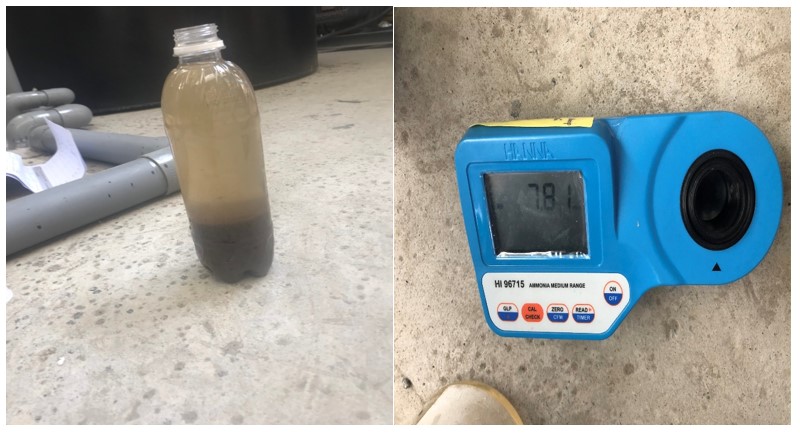
Troubleshooting yellow wastewater
After going down to the system and briefly checking the parameters such as Ph, alkalinity, ammonium, SVI30… The main reason is that the amount of soda added has not been diluted. At the same time, too much molasses was added, leading to the output water being slightly yellow. Microbe-Lift has given the customer a solution: open the drain valve to remove some of the sludge. As for soda, dilute it. At the same time, slowly add drops and stop adding nutrients for a few days to monitor.
>> See more: Causes and solutions for cloudy/light yellow wastewater
Results after 2 weeks of treatment
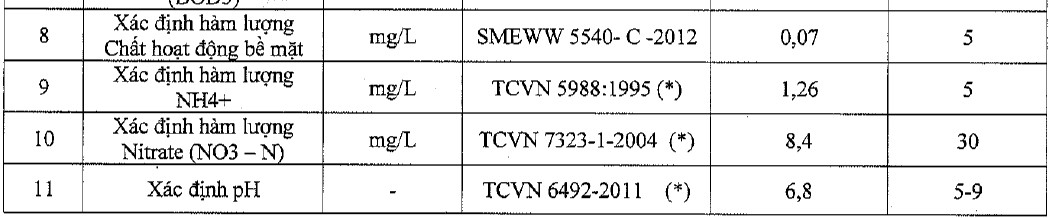
After Microbe-Lift instructed on how to treat yellow wastewater, after a few days the customer responded that the output water was clear again. COD also decreased and the mud color was more beautiful than before. As for Ammonia, it was only 1.26 mg/l. Ammonia treatment met Column A QCVN 14:2008 standards.
If your treatment system is experiencing similar problems, please contact Microbe-Lift immediately via hotline 0909 538 514 for advice and the most effective solution.
Microbe-Lift – The Ammonia Treatment Expert Who Meets Your System Standards!